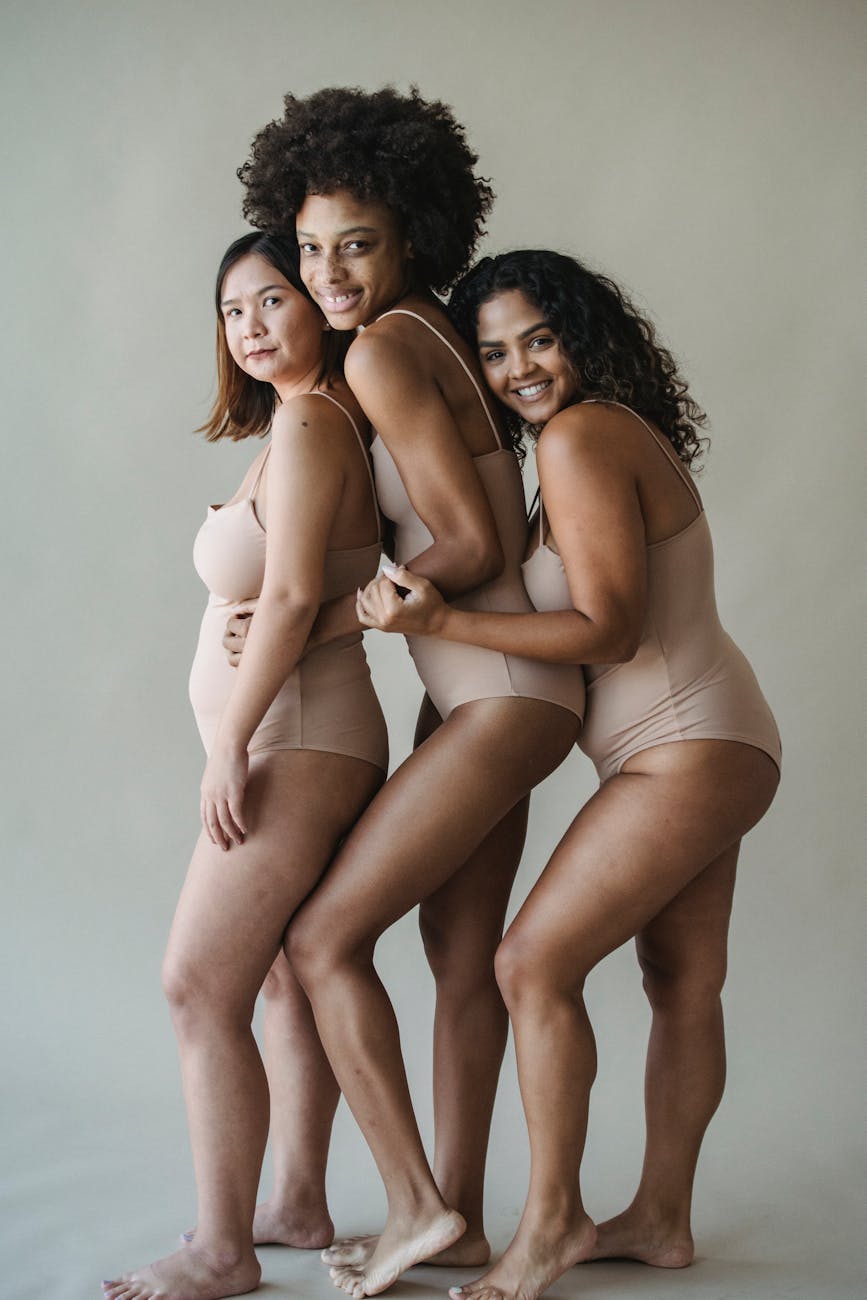
Many women search for how to dress for their body type, but most guides rely on outdated labels and unrealistic rules. This grown-up style guide shows you how to choose clothes that flatter your shape, work with your proportions, and fit your real life, without charts, categories, or restrictions.
If you are also rebuilding your wardrobe this year, this guide works hand in hand with The Ultimate Capsule Wardrobe Australia, What You Actually Need in 2026, which walks you through choosing versatile core pieces that suit your lifestyle rather than fleeting trends.
In this guide
Why Traditional Body Typing No Longer Works
Apple. Pear. Hourglass. Rectangle.
These systems assume that everyone fits neatly into a single category and stays there forever. Real bodies do not behave like that. Hormones shift, lifestyle changes, and weight redistributes. You might have broader shoulders than you used to, softer hips, a fuller bust, or a shorter waist. None of this needs fixing.
Instead of trying to match yourself to a chart, focus on how clothes actually behave on you.
Understand Your Proportions, Not Your Category
Forget labels. Look at three things instead.
Where does your eye naturally go first when you look in the mirror? That is your visual anchor point.
Where do clothes tend to pull, gape, or feel awkward? That is cut, not your body.
What parts of your body do you genuinely love? These are the features you want to frame.
This awareness guides better shopping decisions than any diagram ever could.

Balance Is a Feeling, Not a Formula
Rather than being told never wear this or always highlight that, think in terms of visual harmony.
If your top half feels visually stronger than your lower half, ground your outfit with darker trousers, wider leg cuts, or heavier fabrics below.
If your hips dominate an outfit, bring attention upward with textured knits, statement jewellery, open necklines, or jackets that hold their shape.
It is not about shrinking yourself. It is about making the whole outfit feel intentional.
Structure Is Your Secret Weapon
Structure changes everything.
A blazer that defines your shoulder line.
A coat with a waist seam that creates shape without clinging.
A knit that holds its form instead of collapsing.
These are the pieces that flatter in real life, which is why your capsule wardrobe should always include a few beautifully cut structured staples. You can see how to choose these core items in our Capsule Wardrobe Guide.

Fit First, Everything Else Second
Size is not a number. It is a feeling.
If something fits beautifully on your shoulders but pulls at your hips, buy it and tailor it. If a dress skims your body but gaps at the bust, it is not you, it is the pattern.
A small spend on alterations will change how your entire wardrobe feels.
‘A few years ago I bought a blazer that every fitting room rule said I should avoid. It was slightly cropped, had strong shoulders, and did absolutely nothing to “balance” my body according to the charts. But the moment I put it on, something clicked. I stood taller, my posture changed, and for the first time in ages I did not feel like I was correcting my body, I was celebrating it. That blazer became the piece I reached for on big days, client meetings, dinners, anything where I wanted to feel like myself. It was the moment I realised the problem was never my body, it was the rules.‘ – Chloe, 38
Build Your Personal Outfit Formulas
Every woman has outfits that simply work.
Maybe it is a soft knit with straight leg jeans and ankle boots.
Maybe it is a midi skirt with a tucked tee and blazer.
Maybe it is a relaxed dress with a cropped jacket.
Notice what you reach for on days you feel confident, then repeat those formulas with different colours and fabrics.
This is where dressing for your body becomes effortless.
Fabric Can Make or Break an Outfit
If something technically fits but still feels wrong, fabric is often the culprit.
Clingy jerseys show everything. Ultra thin silks highlight every curve. Cheap synthetics collapse after one wear.
Look for fabrics with weight and movement like ponte, crepe, structured cottons, wool blends, and quality knits that hold shape while moving with you.
Dressing Grown Up Means Trusting Yourself
Your body is not a problem to solve.
When you stop chasing perfection and start choosing clothes that support your life, shopping becomes easier and your wardrobe becomes calmer.
This mindset is exactly why pairing this guide with a considered capsule system works so well. Start with The Ultimate Capsule Wardrobe Australia, What You Actually Need in 2026 and let it shape how you choose every piece that comes after it.
FAQs About Dressing for Your Body Without Rules
How do I dress for my body type if I hate labels?
Focus on fit, fabric, and proportion rather than categories. Notice what feels good on your body and build repeatable outfit formulas around that.
What clothes are most flattering for all shapes?
Well cut blazers, quality knits, straight leg jeans, midi skirts, and dresses with gentle structure suit most bodies when the fit is right.
How do I know if something suits my proportions?
If you feel balanced, comfortable, and confident when you look in the mirror, it suits you. If you keep tugging or adjusting it, it does not.
Can I follow trends and still dress for my body?
Absolutely. Choose trend pieces that align with your existing outfit formulas rather than forcing new shapes that do not feel like you.
How do I build a capsule wardrobe that flatters me?
Start with pieces that already make you feel great, then expand using the framework in your capsule wardrobe guide so every new item earns its place.
Common Fit Issues
See our guide to the most common fit issues.
| Common Fit Issue | What It Means | Try This Instead |
|---|---|---|
| Tops pull across the bust | Garment cut is too narrow in the chest | Size up in the top, then tailor the waist, or choose styles with stretch panels |
| Waist gaps in jeans | Rise and waistband shape do not suit you | Look for curved waistbands or higher rise cuts |
| Jackets feel boxy | Too much ease through the torso | Choose blazers with darts, shaping seams, or a soft belt |
| Dresses cling at the hips | Fabric is too thin for the cut | Opt for ponte, heavier crepe, or lined styles |
| Shoulder seams slide off | Shoulder width not matched to your frame | Try petite or structured shoulder styles |
| Skirts ride up when you walk | Cut is too narrow through the hips | Choose A line or bias cut skirts |
| Trousers wrinkle at the crotch | Rise is too short or too long | Experiment with different rise lengths |
| Necklines feel restrictive | Opening too high or narrow | Try open V, scoop, or wrap necklines |
Dressing for your body is not about chasing perfection or fitting into a category that never really made sense in the first place. It is about noticing what works for you, trusting those instincts, and building a wardrobe that supports the life you actually live.
When you stop fighting your body and start working with it, something shifts. Getting dressed becomes easier, shopping becomes calmer, and your style starts to feel like an extension of who you are, not a correction.


Leave a comment