
By Mukti, Founder of Mukti Organics
Every year I see the same thing happen as the temperature drops: skin that was healthy and glowing throughout summer suddenly feels tight, reactive, dull and dry. While the instinct is to reach for stronger products and more intensive treatments to compensate, more often than not, that can make things worse.
Winter skin needs a different kind of attention. When it’s cold outside, our blood vessels constrict to preserve heat, limiting the flow of oxygen and nutrients to the skin. Oil production slows, and cell turnover – the process that keeps our complexion bright and fresh – becomes sluggish. Add indoor heating, air conditioning and low humidity into the equation, and the skin barrier is working hard to hold onto moisture. The result is that familiar winter combination: dull, dehydrated, sensitised skin that seems to resist everything you try to combat it.
The good news is that a few considered adjustments to your skincare routine can make a significant difference.
Swap to a gentle, hydrating cleanser
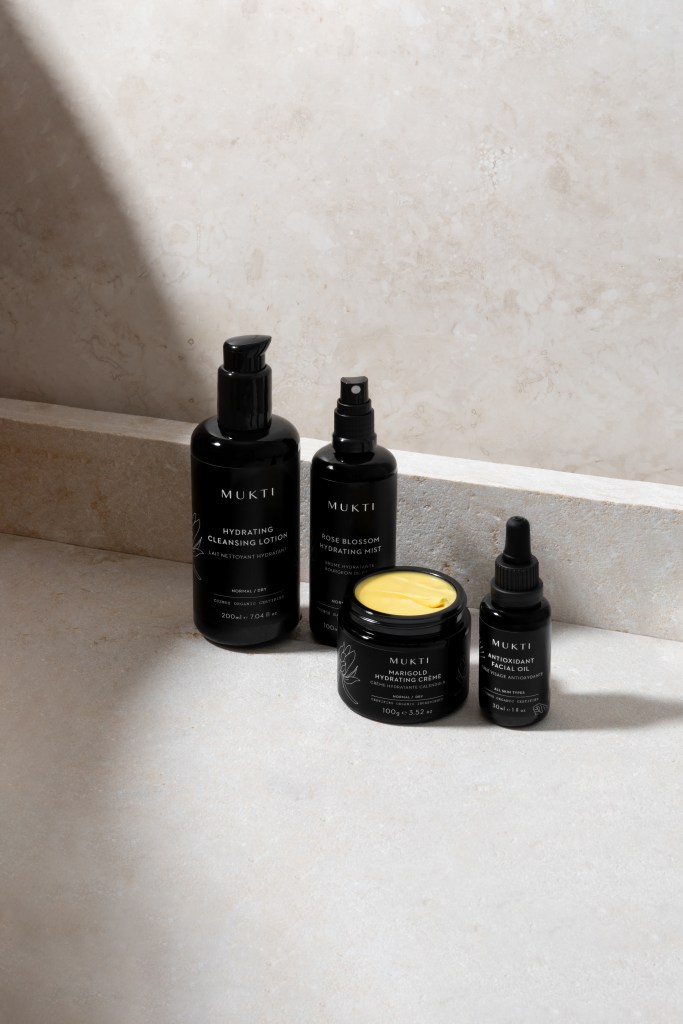
Cleansing is often where winter skin disruption begins, and it’s actually the easiest fix. Most foaming or gel cleansers, even gentle ones, can strip essential lipids from the barrier, increasing trans-epidermal water loss (TEWL) and leaving skin tight and reactive. Switching to a cream or lotion-based cleanser through the colder months is one of most effective things you can do. Look for formulas with nourishing ingredients like shea butter, macadamia oil, or Kakadu Plum – ingredients that condition as they cleanse rather than leaving the skin compromised. Our Mukti Organics Hydrating Cleansing Lotion was formulated specifically with this in mind: it removes impurities without disrupting the barrier, which is exactly what winter skin needs.
Understand the difference between dry and dehydrated skin, and address both
This is a distinction that’s important to understand, because treating the wrong thing won’t get you the result you’re after. Dryness refers to a lack of oil in the skin; dehydration refers to a lack of water. Winter often creates both, and they require different solutions.
For dehydration, humectants are your best tool so look for ingredients like hyaluronic acid and glycerin that actively draw moisture into the skin. Apply them to slightly damp skin for best results. Our Hyaluronic Marine Serum combines low-molecular-weight hyaluronic acid with wakame seaweed to sink into the deeper layers of the skin, and is ideal for winter.
For dryness, you need a thick occlusive moisturiser to seal the hydration in and form a protective layer that slows water loss and shields the skin from cold, wind and dry indoor air. The Marigold Hydrating Creme is our hero product for exactly this. Key ingredients like calendula, centella asiatica, CoQ10 and vitamin E work together to nourish and protect against redness, dryness and irritation while supporting the barrier. It’s perfect for both the face and the hands through the colder months.
Combat heating and air conditioner with a facial mist
If you work in a heated or air-conditioned environment, your skin is being dehydrated around the clock. Keep a facial mist sitting on your desk for a quick spritz throughout the day to replenish surface moisture, help calm any heat or flushing, and keep your morning skincare working harder for longer. Look for one that contains active hydrating and protective ingredients.
Add a facial oil to your routine
One of my hero products for winter is a well-formulated facial oil, and it’s often the missing piece for skin that feels persistently dry despite good moisturiser use. A blend rich in essential fatty acids omegas 3, 6 and 9 helps reinforce the skin’s natural lipid barrier, supports moisture retention, and imparts that dewy glow that winter skin tends to lose. Our Antioxidant Facial Oil, made with 16 superfood oils including rosehip, sea buckthorn and native Kakadu plum, is a true cold-weather essential. It absorbs readily and works well for all skin types.
Reconsider your actives, but don’t abandon exfoliation
One of the most common winter mistakes I see is over-correcting dullness by piling on strong actives like retinoids, high-strength acids and multiple resurfacing treatments when the barrier is most vulnerable. If your skin is feeling tight, reactive or inflamed, it’s telling you to dial back the stimulation and focus on restoration.
That said, don’t abandon exfoliation entirely. In winter, cell turnover slows down, so dead skin cells accumulate on the surface and don’t slough off as efficiently, which is why the complexion can appear dull. A gentle exfoliant used once or twice a week, particularly one with brightening fruit enzymes or natural AHAs, can make a noticeable difference to radiance and texture without compromising the barrier. Opt for calming, antioxidant-rich ingredients such as niacinamide, panthenol and resveratrol through this season.
Double down on hydrating treatment masks
Winter is the time to double your mask frequency, whatever that currently looks like. A concentrated hydrating or barrier-repair mask twice a week delivers a level of nourishment that daily skincare can’t match, and the cumulative effect on skin comfort, radiance and resilience will be noticeable.
Don’t forget your body
Facial skincare tends to get all the attention, but the skin on your body deserves the same considered care in winter. After bathing, while your skin is still damp, apply a body lotion and follow it with an oil – layering this way traps the maximum amount of moisture and helps prevent the tight, flaky dryness the season brings.
Winter skincare simply asks for a different approach: less aggression, more nourishment, and products that work with the barrier rather than against it.






Leave a Reply