
There are some beauty treatments you book because you want an instant glow, and others you book because you are prepared to look considerably worse for a few days in the hope of looking much better afterwards. CoolPeel is definitely the latter.
It is certainly not a lunchtime facial, despite the relatively quick treatment time, but nor did my experience resemble the dramatic long recovery traditionally associated with aggressive CO₂ laser resurfacing. There was redness, heat, dryness and several days where my skin felt remarkably like sandpaper. There were also a couple of days when I absolutely would not have wanted an important meeting, dinner or event in the diary. But then came the payoff.
By around day seven my skin was looking noticeably fresher. By day ten, it was properly glowing: smoother, clearer and more refined, with that polished quality that is difficult to achieve with skincare alone. And because the collagen-remodelling benefits of fractional CO₂ laser continue to develop after the initial recovery period, those first ten days are not necessarily the final result.
For someone like me, whose skin is already in relatively good condition and is accustomed to professional treatments, CoolPeel felt less like an attempt to fix a major skin problem and more like pressing refresh. Texture looked more refined, pores appeared less obvious and the overall complexion looked brighter and more even.
Would I do it again? Absolutely. But I would also be realistic about the downtime.
Here is exactly what my CoolPeel experience was like, from preparing my skin and the laser itself to the slightly alarming first night, the sandpaper phase and, finally, the glow.
What Is CoolPeel?
CoolPeel is an advanced fractional CO₂ laser resurfacing treatment delivered using DEKA CO₂ laser technology. Rather than treating the entire surface of the skin uniformly, fractional resurfacing creates microscopic treatment zones while leaving surrounding tissue intact.
The purpose is to trigger the skin’s natural repair process and encourage new collagen production while addressing concerns including uneven texture, visible pores, fine lines, sun damage, pigmentation and acne scarring.
Traditional fully ablative CO₂ resurfacing can be extremely effective but is also associated with significant downtime. CoolPeel has been developed to deliver CO₂ laser energy in very short pulses, limiting unnecessary heat transfer into surrounding tissue and, depending on the settings used, reducing recovery time.
Importantly, however, the term “minimal downtime” needs context.
My experience definitely involved downtime.
I had a mid-level treatment because my skin is already accustomed to professional treatments, and for the first two days there was no chance I would have described my complexion as normal. I could technically have gone about everyday life, but I wouldn’t have wanted to go into an office, attend an event or have anything important photographed.
By day three, however, things changed quickly.
That balance is perhaps the most useful way to think about CoolPeel. It delivers more impact than a very light resurfacing facial, without necessarily demanding the prolonged recovery associated with traditional aggressive CO₂ resurfacing.
Why I Tried CoolPeel
I am already quite disciplined about skincare and professional treatments, so I wasn’t approaching CoolPeel with severely damaged or neglected skin.
My goals were refinement rather than transformation.
I wanted to improve pore visibility, soften very fine lines, maintain collagen production, improve pigmentation and give the skin a comprehensive reset rather than chase one particular concern.
I am generally a believer in investing in treatments that create a measurable change in the skin rather than constantly adding another serum to the bathroom cabinet. That doesn’t mean topical skincare is irrelevant. Far from it. The basics become particularly important before and after a treatment like this.
In our edit of the five skincare products I happily spend my own money on, barrier support, vitamin A and daily SPF are deliberately prioritised over an unnecessarily complicated routine. CoolPeel reinforced that philosophy. When your skin is actively healing, simplicity suddenly becomes very appealing.
Preparing My Skin for CoolPeel
Preparation will depend on your skin, your existing skincare routine, your pigmentation risk, medications and the strength of the treatment being performed, so your treating clinician’s instructions should always override a generic routine found online.
That said, I think one of the most important things you can do before CoolPeel is resist the temptation to over-treat your skin immediately beforehand.
You want to arrive with a healthy, calm skin barrier rather than skin that has just been exfoliated into submission.
Depending on your provider’s advice, you may be asked to pause ingredients such as retinoids, exfoliating acids and other potentially irritating actives before treatment. If you use prescription skincare, have a tendency towards pigmentation, experience cold sores or take medications that affect the skin, this should all be discussed with your clinician in advance.
In the days immediately before my treatment I focused on hydration, gentle cleansing and keeping my skin calm.
Sun protection is also particularly important. Turning up to a laser appointment with fresh sunburn or a recent tan is obviously not the goal.
This is one of those occasions where the boring beauty advice really does matter: keep your skin hydrated, don’t experiment with a new peel three nights beforehand and wear your sunscreen.
If you struggle to find an SPF you genuinely enjoy wearing, our Beauty of Joseon Relief Sun Rice + Probiotics SPF50+ review is a good place to start. Ultimately, the best sunscreen is the one you are happy to apply generously and consistently.
The CoolPeel Treatment Experience
This was the part I expected to be considerably worse than it actually was.
The appointment started with a thorough double cleanse to remove makeup, skincare, sunscreen and anything else sitting on the skin.
Next came numbing cream.
The cream was left on for approximately 25 to 30 minutes, which is easily the longest part of the actual treatment process. There is something mildly strange about sitting around waiting for your entire face to become progressively less connected to the rest of your body, but it does make the laser itself much easier.
Once the numbing cream was removed, the actual CoolPeel treatment was surprisingly fast.
My full-face treatment lasted roughly ten minutes.
That is one of CoolPeel’s biggest advantages. You are not lying there enduring laser passes for an hour while reconsidering every decision that led you to that moment. It moves quickly from area to area and, before you have much time to become bothered by the sensation, it is over.
Does CoolPeel Hurt?
For me, the pain was around 3 to 4 out of 10. It was completely bearable.
The sensation is difficult to describe if you have never had laser before. There is heat, but it isn’t simply a hot feeling. It also has a sharp, slightly spiky quality.
Certain areas are more noticeable than others, as you would expect, but nothing reached the point where I felt I couldn’t tolerate it. More importantly, it is so quick.
Had the sensation continued for 45 minutes I might have a different opinion. For ten minutes, I found it very manageable.
Once the laser was finished, a cooling sheet mask was placed over my face. At that point the cold felt incredibly good. My therapist used ice rollers so gently cool the skin over the sheet mask.
The mask helped take the edge off the heat and gave the skin an immediate sense of relief after the treatment.
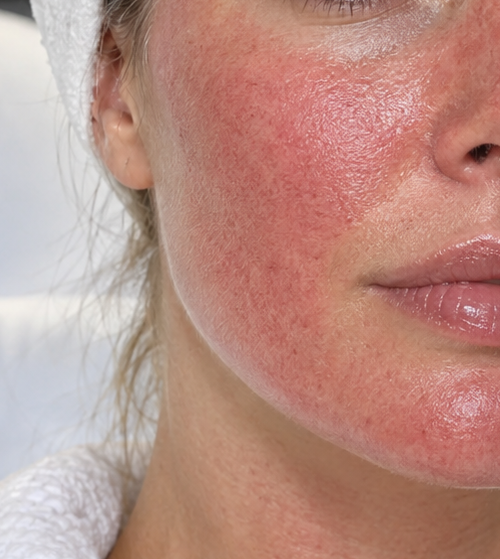
Immediately After CoolPeel
This is where CoolPeel stops feeling like a relatively uneventful ten-minute treatment and starts behaving like a proper resurfacing procedure. My face was very red. Not subtly flushed. Red.
It also felt extremely hot for the remainder of that evening. The closest comparison is quite a bad sunburn: hot, tight, tender and distinctly aware of itself.
I wouldn’t describe the post-treatment sensation as severe pain. It was more persistent heat and soreness.
You are very aware that something has happened to your skin.
For me, that first evening was the most uncomfortable part of the process.
I kept everything incredibly simple, stayed hydrated and resisted the urge to touch my face constantly.
I also took an antihistamine on the day of treatment and for the following two days to help with swelling and itchiness. That was part of my own approach, but medication around a procedure is something to discuss with your treating clinician or pharmacist rather than automatically copying someone else’s protocol.
The First Week After CoolPeel: My Day-by-Day Recovery
Recovery is where individual CoolPeel experiences can differ considerably.
Your laser settings, treatment depth, skin type, existing sensitivity and the areas treated will all influence what happens next.
I had a medium-level treatment rather than the lightest possible CoolPeel because my skin is used to professional treatments.
This was my experience.
Day 0: Treatment Day
Immediately after treatment my face was bright red and felt very hot.
As the numbing cream completely wore off, the sensation became similar to a reasonably strong sunburn. My skin felt tight, hot and tender.
I had no desire to put anything complicated on it.
That evening was all about cooling, hydration and leaving the skin alone.
I drank plenty of water and avoided alcohol. I also tried to keep my diet relatively sensible and avoid excessive alcohol, sugar and very salty foods while my skin was recovering. I don’t think there is any need to become obsessive about this, but when my skin is healing I would rather make hydration and good nutrition easier on my body, not harder.
Day 1: Red, But Much Less Sore
The following morning my skin was still visibly red. However, a lot of the soreness had already subsided.
This was a major improvement from the previous evening. My face still looked like it had been through something, but it no longer had that intense freshly sunburnt feeling.
I would still categorise this as a definite downtime day.
Could I have gone to the supermarket? Yes.
Would I have wanted to go to an important work meeting, lunch or dinner? No.
If you are considering CoolPeel and trying to plan your diary, I would give yourself treatment day plus at least the following day with very little scheduled.
Day 2: Welcome to the Sandpaper Stage
Day two was probably the strangest stage. The redness had improved, but my skin became incredibly dry and textural.
“Sandpaper” is the best description.
If you ran your fingers across the skin, it felt rough, dry and almost gritty. This is not the moment to panic and start exfoliating. In fact, this is exactly when you need to do the opposite.
Your skin is recovering. Trying to accelerate the shedding process with scrubs, acids or retinoids is not a clever shortcut.
I kept cleansing and moisturising and let my skin do what it needed to do.
There was still some redness on day two, although considerably less than immediately after treatment.
This was the second day when I wouldn’t particularly have wanted work commitments.
Day 3: Back to Normal Life, With Very Dry Skin
By day three, the redness had essentially disappeared for me. That was the turning point.
My skin was still extremely dry and rough, but I looked much more like myself again.
I wore mineral foundation from day three and was comfortable going back to normal activities. Whether makeup is appropriate at that point should be confirmed with your own provider because post-laser instructions can differ.
If you are wearing base makeup during this stage, I would keep expectations realistic. The dryness means foundation is not going to glide over the skin in quite the same way it normally does.
You are covering colour, not texture.
This is also when a lighter-handed approach to makeup makes sense. If you’re interested in skin-like bases, we have reviewed everything from the TIRTIR Mask Fit Red Cushion to Ellis Faas Skin Veil, but immediately after resurfacing I would always follow the specific advice of the clinic rather than assuming your everyday foundation is suitable.
Day 4: Still Dry, But Looking Much Better
Day four was another significant improvement.
My skin still felt dry, but visually it was beginning to look much better.
The roughness remained more obvious to me than it probably was to anyone else.
At this stage the recovery becomes much easier mentally because you can see where things are heading. The initial redness is behind you, the heat is gone and the complexion starts looking more even.
I was still very disciplined about hydration and resisted introducing actives simply because the skin looked healthier.
Days 5 to 6: The Skin Starts Turning a Corner
Around days five and six, the dry, sandpapery feeling continued to ease. This is the point where it becomes tempting to exfoliate everything away.
I didn’t.
There is a difference between skin naturally shedding and aggressively trying to force that process.
Instead, I continued with gentle cleansing, moisturiser and sun protection. Each morning the skin looked incrementally better.
Day 7: The Payoff Starts
By day seven, my skin was looking genuinely good.
The dry phase was substantially improved and the complexion looked fresher and more refined.
This is the point where I started thinking, yes, this was worth it.
The difference wasn’t that I suddenly looked like a different person. It was more sophisticated than that.
The skin simply looked better. More even. Smoother. Clearer. Fresher.
Day 10: The Glow
By approximately day ten, the transformation was much more obvious. My skin looked incredibly fresh and glowy.
Pores looked more refined, the surface of the skin looked smoother and the overall tone appeared clearer.
This is the kind of result I personally want from an aesthetic treatment. I don’t want to look noticeably “done”. I want my actual skin to look exceptionally good.
And that is where CoolPeel delivered.
The Post-CoolPeel Skincare Routine I Used
If there is one piece of advice I would emphasise after a treatment like this, it is to stop trying to improve your skin for a few days.
Your skin already has a job. Let it heal.
I did not use retinol, retinal, exfoliating acids, vitamin C or strong treatment serums during the initial recovery period.
I used a very plain cleanser and straightforward hydrating, barrier-supporting moisturisers.
My cleanser was Cetaphil, which was exactly what I wanted at this stage: uncomplicated and gentle.
For hydration I relied heavily on iS Clinical SHEALD Recovery Balm, which is specifically positioned as a rich moisturising balm for dry, compromised and post-procedure skin.
I also used La Roche-Posay Cicaplast Baume B5+, an enduring favourite for a reason. It is rich, soothing and designed to support a compromised skin barrier, and La Roche-Posay specifically lists it as suitable for post-procedure skin.
Cicaplast is actually one of the products in our beauty editor’s five skincare products worth spending money on, and CoolPeel recovery reminded me exactly why.
This is not the week for an elaborate 12-step skincare routine.
Cleanse. Hydrate. Protect. That is essentially it (I found there is something quite relaxing about having a simplified skincare routine for a few days instead of my usual 8-step one).
Once your provider clears you to reintroduce your normal routine, you can gradually bring back your usual products. I would not rush this simply because the visible redness has disappeared. Skin can look normal before the barrier feels completely normal.
If your skin tends to become dehydrated easily, something like the Torriden Dive-In Serum we reviewed here can be useful as part of a regular hydration-focused routine once your clinician is happy for you to return to normal skincare, but during the immediate recovery period I kept things much more basic.
What You Should Avoid After CoolPeel
This is where following your clinic’s instructions matters. Post-treatment protocols vary according to the laser settings used and your individual skin, so your practitioner should give you specific aftercare instructions.
Generally, this is not the time to throw active skincare at your face.
I avoided strong exfoliants, retinoids and anything that could unnecessarily irritate the skin during those first days.
I was also particularly cautious with heat and sun exposure.
Your skin has just been resurfaced. Baking it in direct sun immediately afterwards would be counterproductive, particularly if pigmentation is one of the concerns you are trying to improve.
Likewise, I would not plan a CoolPeel immediately before a beach holiday, major event or week where you know you will be unable to control sun exposure.
Hydration also became a priority for me. I drank plenty of water each day and kept alcohol to a minimum through the recovery period.
How Much Downtime Does CoolPeel Really Have?
This is probably the question I would have wanted the clearest answer to before treatment.
For me, there were two genuine downtime days.
Day zero and day one were the obvious ones, with day two still dry, slightly red and texturally strange enough that I wouldn’t schedule anything important.
By day three I was comfortable returning to normal life and wearing mineral foundation, although my skin still looked very dry.
By day four I looked much better.
By day seven, the treatment was starting to pay me back.
Of course, this is one experience rather than a guarantee. A lighter treatment could involve less visible recovery. A stronger treatment could involve considerably more.
I would therefore book CoolPeel assuming that you may want two quiet days afterwards rather than believing there is literally zero downtime. If you happen to recover faster, consider it a bonus.
What Are the Results of CoolPeel?
The early result for me was primarily a visible improvement in skin quality. By day ten, my skin looked noticeably fresher and more luminous.
Texture appeared smoother. Pores looked more refined.
The complexion looked clearer and more even.
Fine lines appeared softened and the entire face had a polished quality that I simply don’t get to the same degree from a standard facial.
CoolPeel is designed to address concerns including skin texture, sun damage, visible pores, fine lines and acne scarring, while fractional CO₂ resurfacing also stimulates the skin’s repair response and collagen production.
That longer-term collagen response is particularly appealing because the treatment isn’t simply about looking glowy ten days later.
Results can continue developing over the following weeks and months as the skin remodels.
For me, that makes CoolPeel considerably more interesting than a treatment that gives you beautiful skin for a weekend and then disappears.
CoolPeel for Fine Lines
This is one of the reasons I would consider doing the treatment again.
Very fine lines often respond better to improvements in overall skin quality than they do to simply layering more moisturiser on top.
Resurfacing can soften that crepey, finely textured quality that tends to develop with age and cumulative sun exposure.
I wouldn’t expect one moderate CoolPeel session to erase established deep wrinkles, nor should it be marketed that way.
For early fine lines and general skin maintenance, however, I was impressed.
CoolPeel for Pores and Texture
Texture was probably one of the most noticeable improvements for me.
“Pore size” is slightly misleading because pores don’t simply open and close like doors, but treatments that improve the surrounding skin structure and surface texture can make them appear considerably less obvious.
My skin looked smoother and more refined once the recovery period was complete.
Makeup also benefits from this.
When the underlying skin is smoother, you simply need less product to make it look polished.
CoolPeel for Pigmentation and Sun Damage
Fractional CO₂ resurfacing can also be used to improve visible sun damage and uneven pigmentation, although pigmentation is an area where professional assessment becomes particularly important.
Not every type of pigmentation should be treated identically, and your skin tone, history and tendency towards post-inflammatory hyperpigmentation all matter.
This isn’t a treatment I would choose solely because a social media before-and-after looked impressive.
It is worth finding an experienced laser clinician who can assess what is actually causing the pigmentation and determine whether CoolPeel is appropriate for your skin.
Is CoolPeel Better Than Skin Needling?
They are different treatments, but having experienced both, I found CoolPeel more uncomfortable and higher downtime than skin needling, but with a stronger result.
Skin needling is still an excellent treatment and one I rate highly. For me, however, the resurfacing effect from CoolPeel was more obvious. The trade-off is that CoolPeel demands more from you.
There is more heat during treatment, more redness afterwards and a more noticeable recovery stage.
If you want something relatively easy to fit into a busy week, needling may be more appealing.
If you are willing to give up a couple of days for a more significant refresh, CoolPeel has a strong argument.
Is CoolPeel Painful?
Not particularly, in my experience. I would rate it about 3 to 4/10 with numbing cream.
It feels hot, prickly and slightly like tiny needles touching the skin, but the full-face treatment was over in about ten minutes.
The heat afterwards bothered me more than the treatment itself.
Again, treatment settings matter enormously here. Someone undergoing a stronger resurfacing protocol may have a very different experience.
Can You Wear Makeup After CoolPeel?
I wore mineral foundation from day three.
By then my redness had disappeared and I felt comfortable returning to normal activities, although the skin remained very dry.
You should ask your own provider when makeup can be reintroduced because this can depend on how aggressively you were treated and how your skin is healing.
And even when makeup is permitted, don’t expect a completely flawless base immediately. Dry, healing skin has texture. Let it.
When Does CoolPeel Start Working?
There are really two stages of results. The first is the visible post-recovery improvement.
For me, that started around day seven and became much more obvious around day ten. The second is the longer-term result.
Because resurfacing triggers a healing and collagen-remodelling process, improvements can continue developing over the following weeks and months.
That is why I wouldn’t judge the treatment solely by what your face looks like one week later.
How Often Would I Have CoolPeel?
Personally, I would not turn this into an every-few-weeks treatment.
My skin is already in very good condition and I use professional skincare, SPF and other treatments consistently.
For me, CoolPeel makes sense as a once or perhaps twice-yearly skin reset, depending on what my skin needs.
That feels like the sweet spot.
It is substantial enough that I don’t feel the need to constantly repeat it, but the results are strong enough to justify including it in a longer-term skin-maintenance plan.
Someone treating significant acne scarring, sun damage or another specific concern may be recommended a different treatment schedule by their practitioner.
Who Is CoolPeel Best For?
I can see the appeal for anyone who is starting to notice that skincare alone is no longer producing the improvement they want.
It may be particularly interesting if your concerns include:
- Fine lines and early signs of ageing
- Uneven or rough skin texture
- Enlarged-looking pores
- Sun damage
- Uneven pigmentation
- Acne scarring
- General dullness
- Loss of that fresh, refined skin quality
It is also a good option for someone who wants the benefits associated with fractional CO₂ resurfacing but isn’t ready for the recovery involved with a much more aggressive ablative laser treatment.
That said, suitability needs to be assessed professionally, particularly if you have darker skin, melasma, a history of pigmentation problems, active acne, compromised skin, certain medical conditions or medications that affect healing.
What I Wish I Had Known Before CoolPeel
The biggest thing is that “low downtime” does not necessarily mean “you will look completely normal tomorrow.”
I didn’t.
The evening after treatment my face was extremely red and hot.
The next day it was still red.
Day two involved a very strange sandpaper texture.
But it all improved remarkably quickly.
Had I booked a wedding, major presentation or important dinner within those first 48 hours, I would have regretted it.
I would also make sure you have your post-treatment skincare ready before you go.
Do not finish your laser appointment and then start wandering around a beauty store looking for a moisturiser while your face feels like it is radiating heat.
Have a gentle cleanser, a substantial barrier-supporting moisturiser and your provider-approved SPF waiting at home.
And clear the calendar.
Two quiet days made the entire experience much easier.
The CoolPeel Verdict: Is It Worth It?
For me, yes. Very much so. CoolPeel isn’t completely painless, and I don’t agree with the idea that it has no downtime at all, at least not at the treatment level I had.
But neither of those things would stop me doing it again. The discomfort was around 3 to 4 out of ten and lasted approximately ten minutes.
The really red, uncomfortable stage passed quickly. By day three I was back to normal life. By day seven my skin looked great. By day ten it looked genuinely exceptional.
That is a trade I am happy to make.
Compared with skin needling, I found CoolPeel more uncomfortable and the recovery more noticeable, but I also thought the result was stronger.
My skin is already quite good, so I wasn’t looking for a dramatic correction. What CoolPeel delivered was a total refresh: smoother texture, refined-looking pores, improved luminosity and an overall clarity that made my skin look healthier rather than artificially altered.
And perhaps that is the best argument for it.
The end result doesn’t scream laser treatment.
It just looks like very, very good skin.
For me, CoolPeel earns a place in the treatment calendar once or twice a year rather than becoming something I constantly repeat. Combined with consistent SPF, sensible skincare and treatments such as needling in between, it feels like a more considered approach to maintaining skin long term.
Would I sacrifice two slightly antisocial days for the result again?
Without hesitation.
CoolPeel Review: The Quick Take
Pain: 3-4/10
Treatment time: Approximately 10 minutes, after around 25-30 minutes of numbing
Immediately afterwards: Very red, hot and similar to a strong sunburn
Day 1: Still red, significantly less sore
Day 2: Dry, rough and sandpapery with some remaining redness
Day 3: Redness gone for me, still very dry; I returned to normal activities and wore mineral foundation
Day 4: Still dry but looking considerably better
Day 7: Skin noticeably smoother and fresher
Day 10: Significant glow and visible improvement in overall skin quality
Downtime: I would realistically allow at least two days without important commitments
Best for: Texture, visible pores, fine lines, sun damage, pigmentation and overall skin rejuvenation
Would I do it again? Yes. For my skin, approximately once or twice a year feels sufficient.
Editor’s note: This article documents a personal experience with CoolPeel and is not medical advice. Laser settings, recovery times, risks and results differ according to skin type, treatment intensity and individual circumstances. CoolPeel should be performed by an appropriately qualified provider, and pre- and post-treatment instructions should always be tailored to your skin.





Leave a comment