
Your makeup bag can become a small museum of habits. The foundation shade you chose years ago. The concealer triangle you learned from a tutorial. The powder you sweep over everything because that is how you have always finished your face. Then one morning the familiar routine looks different, and the temptation is to blame your skin.
A more useful response is curiosity. Perhaps you need less product in one place and more definition in another. Perhaps the formula that once felt comfortable now looks dry by lunch. Or perhaps you have simply changed your mind about what you enjoy seeing in the mirror.
Makeup after 40 does not require a smaller palette of acceptable colours or a new collection of product. It benefits from checking your old assumptions behind your routine. Your skin, features, lighting, preferences and daily life offer much better instructions than a birthday.
First, stop treating 40 as a skin type
Two people of the same age can have very different skin. One may be oily and prone to breakouts; another may feel dry; another may be managing sensitivity. A product labelled for mature skin cannot account for all of those differences.
Hormonal changes can play a role later in midlife. The American Academy of Dermatology’s menopause guidance describes changes including dryness and acne, but these are individual experiences rather than a timetable every face follows.
Begin by noticing what is happening now. Does foundation separate around your nose, gather beneath your eyes or catch on flaky patches? Is the problem visible immediately, or only after several hours? The answer helps distinguish an application issue from a formula that does not suit you.
Persistent irritation deserves appropriate care rather than more coverage. Makeup can change the appearance of skin; it is not a substitute for investigating a rash or a sudden skin change.
Rule to forget: more foundation will make skin look smoother
Foundation can even out colour. Adding more does not necessarily improve the appearance of texture. If the first layer looks dry or heavy, another layer may make the same problem more obvious.
Start where you want evening out, often around the nose, chin or central cheeks, and blend the remaining product towards the edges. Pause before covering areas whose colour you already like. You may find that a relatively small amount makes the whole face look more consistent.
Coverage and finish are separate decisions. A light product can be very shiny, while a fuller-coverage formula can have a restrained satin finish. Try to identify what you want from each rather than assuming sheer automatically means flattering.
Our guide to BB cream, CC cream and tinted moisturiser explains the categories, but the label is only a starting point. Look at the actual result on your skin and how it wears during a normal day.
Rule to forget: everyone needs a very dewy base
Dewiness can be lovely, but reflective skin is not the only version of fresh-looking makeup. A glossy base may feel uncomfortable on an oily T-zone, catch in photographs or simply look more luminous than you enjoy.
Try a restrained approach to finish. Keep the parts you like softly luminous and reduce excess shine where it distracts you. A small amount of powder can make a radiant base more wearable without turning the entire face matte.
If the product looks shiny because several rich skincare layers are underneath it, experiment with a simpler preparation routine. Change one layer at a time so you can see what helps.
Daylight is useful for judging both finish and shade. Look at the jaw and neck together, and allow the formula to settle before deciding. A convincing colour match usually does more for an undetectable base than another elaborate application tool.
Rule to forget: conceal the whole under-eye area
A broad sweep of pale concealer can call attention to the very area you wanted to soften. Instead, identify where you see discolouration. You may only need a small amount near the inner corner or in a particular shadow.
Use a fine brush or fingertip to place product, then blend the edges gently. Let the coverage sit before deciding whether to add more. If it gathers in a crease, remove the excess with a clean tool before setting it.
Concealer cannot flatten an eye bag or erase the shadow created by facial structure in every light. Adjusting expectations makes it easier to stop while the result still looks comfortable and natural.
If dryness is the main issue, our guide to under-eye preparation is worth exploring. Treat cooling patches and similar products as optional preparation, with temporary cosmetic effects, rather than prerequisites for looking awake.
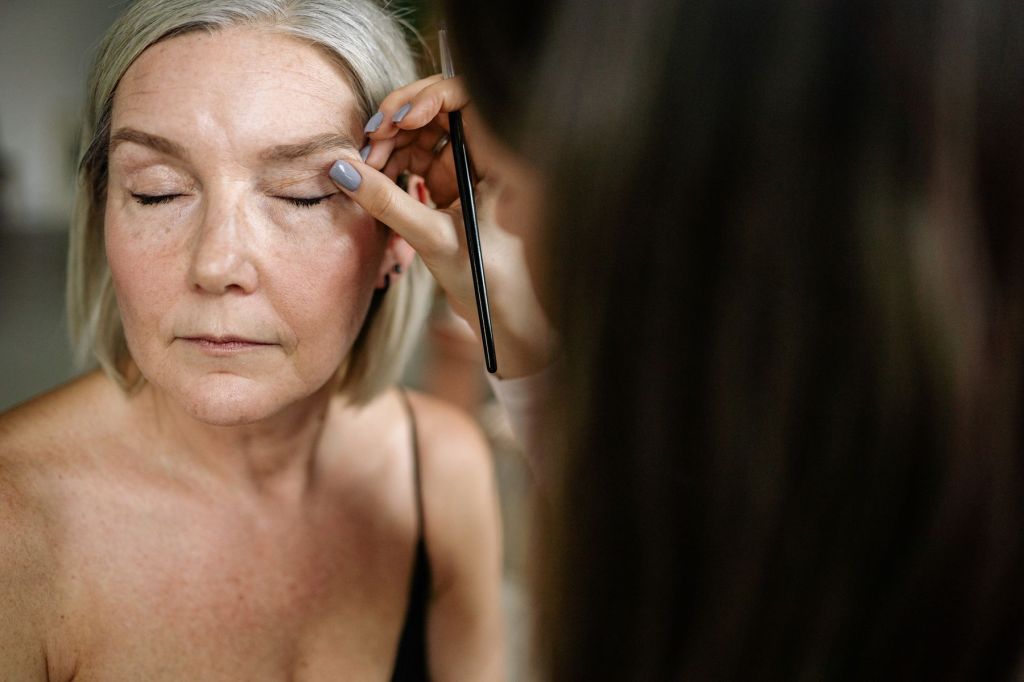
Rule to forget: powder is forbidden after a certain age
Powder is a tool, and placement matters more than a blanket ban. You may want it around the nostrils, through the centre of the forehead or wherever your base moves during the day.
Take a small amount on a brush, remove the excess and press or sweep lightly where needed. Inspect the result before repeating. If you are using a puff, try pressing the product into the puff first so it applies more evenly.
A finely applied powder can be compatible with a soft finish. Equally, you do not need to set every centimetre of your face simply because a tutorial does. Your drier cheeks may be happier left alone.
At lunchtime, check whether you need to remove oil before adding powder. Repeatedly layering product over shine can create a heavier result. A gentle blot and a small, local touch-up may be enough.
Rule to forget: cream formulas are always better
Cream blush and bronzer can blend beautifully, especially when you enjoy a soft sheen. But a cream that disrupts your foundation or disappears quickly is not automatically a better choice than a powder you like.
Think about the whole combination. A sticky base may grip powder unevenly; an emollient cheek product may move a lightly set foundation. Try gentle pressing rather than vigorous rubbing, and avoid changing several products at once when troubleshooting.
Choose texture according to the effect and wear you want. A sheer powder blush can look delicate. A cream blush can look vivid. Neither category belongs exclusively to a particular age group.
Our Victoria Beckham Beauty Colour Wash review offers one editorial perspective on a liquid cheek product. Use reviews to understand texture and application, then judge the shade and formula against your own skin and preferences.
Rule to forget: blush has one correct position
The familiar instruction to smile and colour the apples of the cheeks works for some faces and effects. It is not the only option. Try looking straight ahead with your face relaxed before deciding where you want colour.
A small amount higher on the outer cheek can create a different impression from colour concentrated nearer the centre. Neither placement has to be sold as a correction. You are choosing the shape and mood you enjoy.
Apply a little, step back and look at the whole face. If you have used a stronger lip colour, you may want less blush; with minimal eye makeup, a brighter cheek might be the feature you love most.
Test colour without assuming pale is safer. A muted peach may disappear on one complexion while a berry or terracotta brings it to life. Start with a light application of a colour you like and adjust the depth gradually.
Rule to forget: shimmer and colour have an expiry age
A soft sheen on the eyelid can look beautiful beside fine lines. So can matte colour. The useful distinction is between the effect you want and the behaviour of the product, not whether a finish is permitted.
Try a little shimmer on the mobile lid and see how it looks with your eyes open. If it transfers or falls beneath the eye, test a different formula or application method. The problem may be wear rather than sparkle itself.
Colour can be subtle and still interesting. Plum close to the lashes, olive on the outer lid or navy liner can provide definition without requiring an elaborate eye look.
ELE Styled’s guide to pink eyeshadow for different skin tones is a useful invitation to experiment. Adapt the intensity to your preference rather than assuming colour is reserved for a particular decade.
Rule to forget: your old eyeliner shape must stay the same
Eye shape, lid visibility and your preferred effect can all influence where liner works best. Draw while looking into the mirror naturally, rather than only checking with the eye closed or the skin pulled taut.
A short line close to the lashes may give all the definition you want. If you enjoy a wing, sketch a small version with your eyes open and refine it from there. A long wing is optional, not a proficiency test.
A pencil softly blended at the edge can be easier to adjust than a very fluid liner. Brown can create a quieter result than black, but black remains an excellent choice when you want stronger definition.
Makeup artist Lisa Eldridge’s tutorial on mature skin addresses eye definition alongside an even, luminous complexion. It is a useful demonstration to study for technique rather than a current shopping list.
Rule to forget: nude lipstick is the most flattering option
Some nude shades make a face look wonderfully polished. Others remove more colour than you intended. Compare the shade with your natural lip colour and the rest of your makeup rather than judging it in the tube.
A soft rose, clear berry or red can be easier to wear than a beige that needs careful balancing. Apply with a fingertip for a stain, use a brush for a defined edge or wear it straight from the bullet when that suits you.
Lip liner can help establish the shape you want. Follow your natural outline first and assess the result before extending it. A close colour match often makes small adjustments less obvious.
For a sheer approach, our Clinique Black Honey lip colour review explores a well-known option. No shade is universal, so sample it where possible rather than assuming a popular product will look identical on every complexion.
What works: a routine built around your priorities
Start with comfortable skincare and allow it to settle. Apply a separate sunscreen as directed before makeup. Cancer Council’s skin cancer guide recommends SPF50 or SPF50+, broad-spectrum, water-resistant sunscreen and regular reapplication. Makeup with SPF should not be the sole plan for sun protection.
Then choose one complexion priority: evening out redness, softening a particular shadow or reducing excess shine. Address it locally before deciding whether you need fuller coverage across the face.
Add whichever features make you feel most like yourself. That could be brows and mascara, blush and lipstick, or a beautifully smudged liner with very little else. A short routine is useful when time is limited, but enjoying a longer one is equally legitimate.
Finish by stepping away from the magnifying mirror. Check your face at conversational distance and in the light you will actually be in. You are creating an overall impression, and perfectly normal skin texture is part of it.
Frequently asked questions
Is liquid foundation better than powder after 40?
There is no universal winner. Your skin, desired coverage, preparation and application matter more than age. Try a small amount and assess comfort and wear after several hours.
Should I stop wearing shimmer eyeshadow?
Only if you no longer enjoy it. Experiment with formula, placement and intensity. Fine shimmer and larger glitter particles can create quite different effects.
Why does concealer crease?
Movement, excess product and the interaction between layers can contribute. Try less product, blend the edges and remove any gathered excess before lightly setting where needed.
Do I need a completely new makeup bag?
Usually a technique review is a better first step. Change one product only when you can identify what is not working and what you need instead.
Where to next: What to Read Next
Read our Ellis Faas Skin Veil Foundation review for an editorial look at a complexion formula.
For a contrasting format, explore our TIRTIR Mask Fit Red Cushion review, then compare the coverage and finish with what you actually want from your base.





Leave a Reply