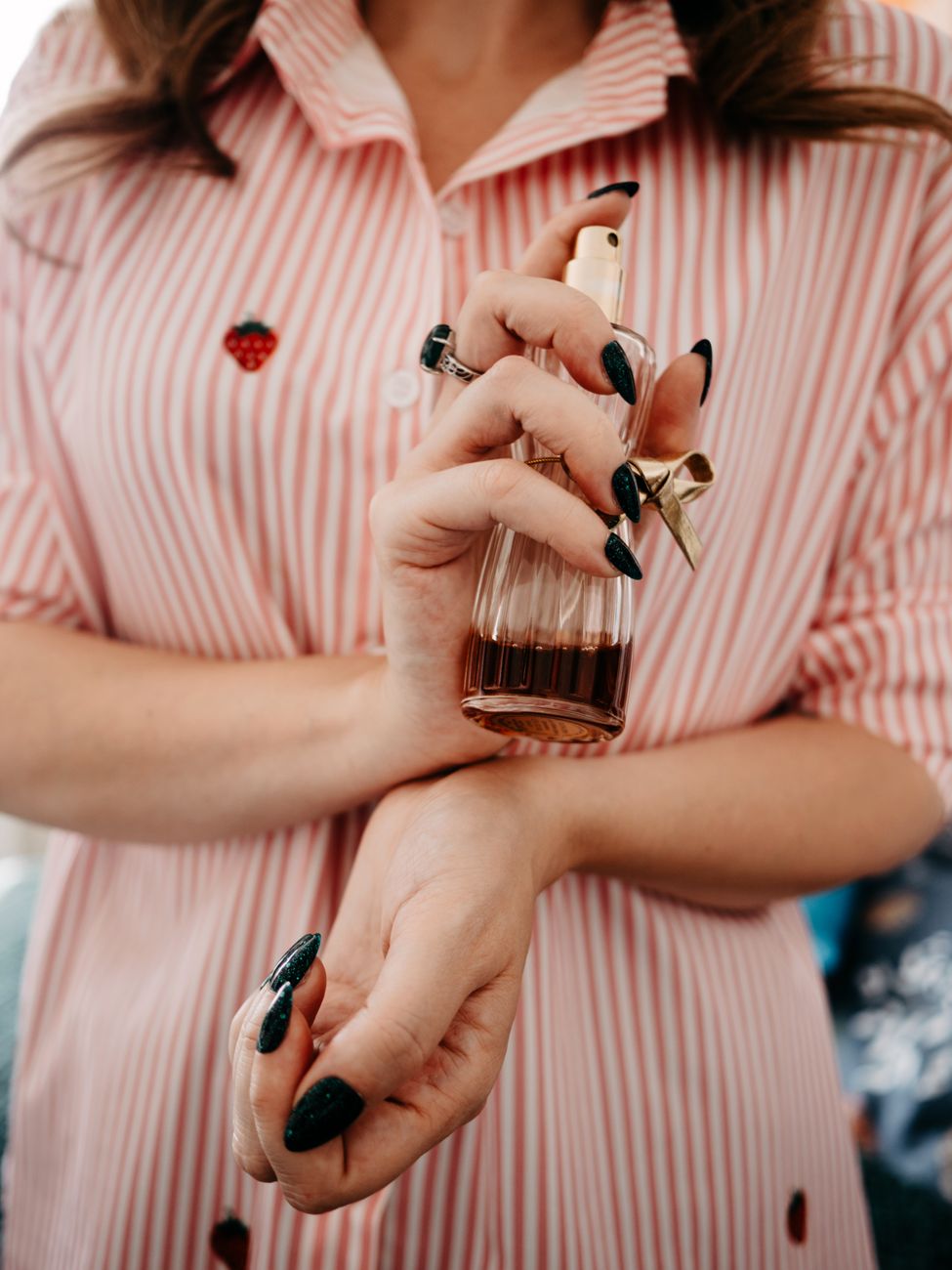
You would not necessarily wear the same jacket to a humid afternoon lunch, an important meeting and a winter dinner. Yet perfume is often expected to do exactly that: represent you perfectly, on every occasion, for years.
There is something lovely about being associated with one scent. There is also pleasure in having a little choice. The fragrance you reach for in a linen shirt might be different from the one you want with a dark knit on a cold evening. Both can feel completely like you.
That is the appeal of a fragrance wardrobe. It gives scent the flexibility you already allow your clothes. The idea is not a demand for a dressing table crowded with expensive bottles, and it does not require abandoning an old favourite. It begins with noticing what you enjoy wearing and when you want something different.
What is a fragrance wardrobe?
A fragrance wardrobe is a small collection of scents you choose between according to preference, occasion, weather or mood. There is no required size and no rule that every fragrance family must be represented.
For one person, two contrasting perfumes might be enough. Another might enjoy three or four, with samples providing occasional variety. The useful measure is whether each scent offers an experience you value, rather than how impressively the bottles line up.
Think of it as an extension of getting dressed. You might want something quiet beside a sharply tailored outfit or something warm with a simple evening look. Our guide to accessorising like a stylist explores how finishing details change an outfit’s character. Scent can be another personal detail, even though it is experienced differently from a bag or earring.
Why one scent does not have to represent every version of you
A signature scent can become associated with memories, routines and relationships. That familiarity is part of its appeal. But familiarity need not become an obligation to keep wearing something when you are in the mood for a change.
You may enjoy a crisp fragrance on a busy morning and want something softer at home. You may love a sweet scent but prefer it in small doses. These are useful observations, not evidence that you have failed to find the perfect perfume.
Changing your perfume can also be a quiet way to enjoy variety without changing your whole appearance. A plain shirt and jeans can feel different to you when the final choice is a green scent rather than a warm, smoky one.
There is no need to assign every scent a personality or a life milestone. “I enjoy this on a cool day” is a perfectly good reason to keep a place for it.
Begin with the perfume you already own
Before sampling anything new, wear your existing perfume deliberately for a few days. Notice what you like about it, when you reach for it and when you leave it untouched.
Try to describe the experience in ordinary language. Perhaps it feels airy, dry, sweet, powdery, green or dense. Those words may help a fragrance consultant more than announcing that you need something sophisticated, a description that can mean almost anything.
Also notice what feels absent. If your favourite is rich and enveloping, perhaps you want something quieter for close working environments. If you own several bright florals, a fourth similar bottle may offer less variety than you imagine.
This is the same practical thinking behind our guide to avoiding impulse purchases. A new perfume earns its place when it adds something you will use, rather than merely providing a brief thrill at the counter.
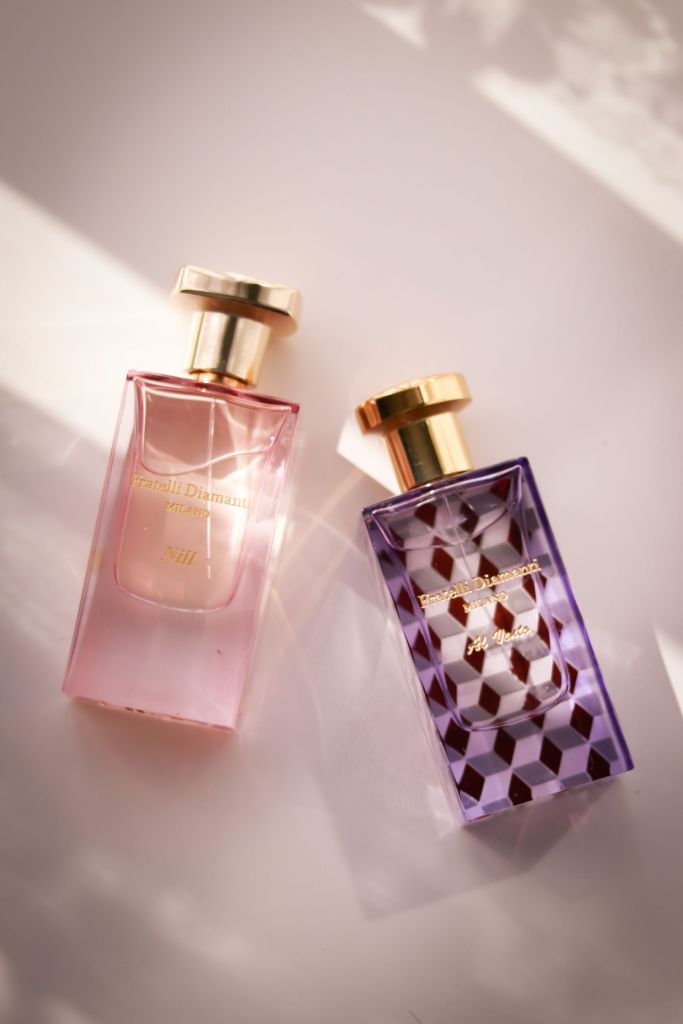
Build around three useful roles
An everyday scent you can wear comfortably
Start with the perfume you would choose for a normal day. It should fit your routine and the settings you spend time in. You may prefer a gentle floral, green fragrance, restrained woody scent or something quite different.
The important point is that you enjoy it beyond the first spray. Wear a sample while working, walking and doing ordinary things. A perfume that feels wonderful for ten minutes but tiring after two hours is giving you useful information.
A contrasting scent for a different mood
Your second fragrance should offer a difference you actually want. If the first is fresh and restrained, perhaps the second is warmer or more textured. If you already wear something rich, you may want a lighter alternative.
Do not select the contrast solely from the note list. Two perfumes described as woody can feel very different, and a floral can be airy or dense. Smell the composition before deciding which category it belongs in for you.
A small space for curiosity
The third role can be filled by samples or a modest travel size. This is where you explore something outside your familiar taste without committing to a large bottle.
You might enjoy a dramatic scent occasionally and still have no desire to wear it every week. A small format can suit that relationship beautifully. Curiosity does not always need to graduate into ownership.
Three perfumes to sample for different directions
The following are examples chosen to illustrate contrast, using the fragrance houses’ own descriptions of their compositions. They are suggestions to smell, not claims that one will suit every wearer or perform for a guaranteed number of hours.
CHANEL CHANCE EAU TENDRE Eau de Parfum offers a floral direction. CHANEL highlights jasmine absolute and rose essence. It is a useful starting point if you want to explore a floral composition before deciding which kinds of florals you enjoy.
Diptyque Philosykos Eau de Toilette takes a green, fig-centred direction. The house describes fig leaves, sap and wood. Try it if the idea of foliage and woody texture interests you more than a conventional bouquet.
Maison Margiela REPLICA By the Fireplace Eau de Toilette provides a warmer contrast through its chestnut accord, woody character and vanilla. It is worth sampling if you are curious about a smoky, sweet composition.
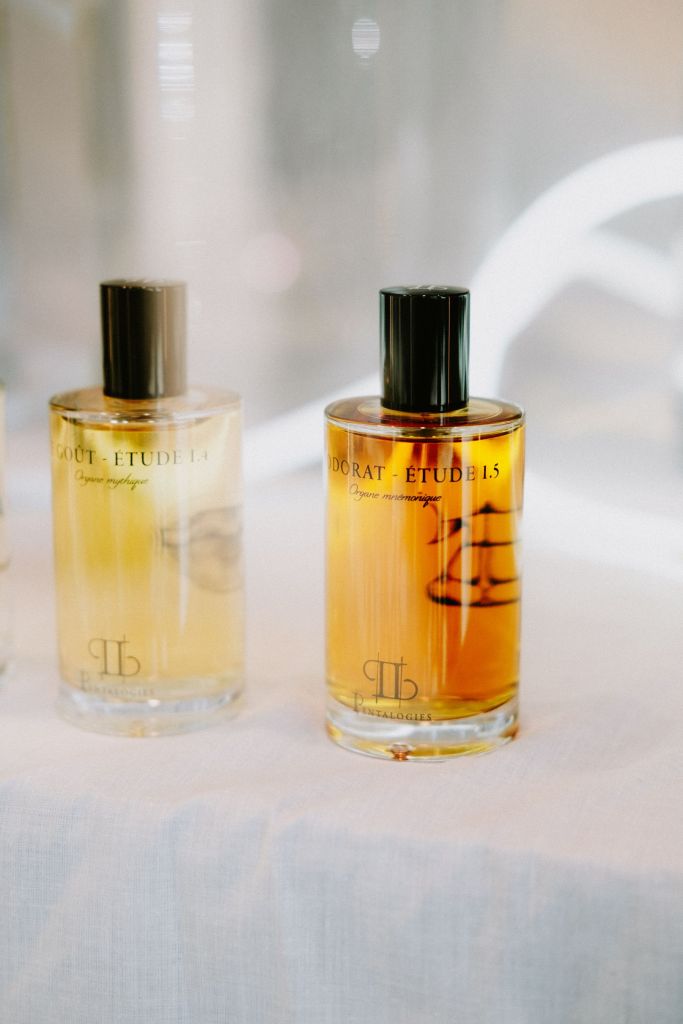
Learn the difference between liking a smell and liking to wear it
A perfume can be fascinating without being something you want around you all day. It might remind you of a place, make an interesting impression on a blotter or simply be a composition you admire at a distance.
Begin on blotters to compare broad directions, then choose one or two you are genuinely curious to wear. Label the blotters and keep them separate. A crowded handful is difficult to compare usefully.
Try the selected scent on skin if appropriate for you, following the product’s directions. Avoid applying several candidates to the same area. Walk away from the counter and notice it later, as well as immediately.
A proper trial should include ordinary conditions. If you are considering it for work, assess it on a normal workday. If it is for evenings, wear the sample for an evening before buying it for a major occasion.

Make sampling a slower, more useful habit
Write down the exact name and concentration, the date you wore it, what you liked and what bothered you. A simple note such as “lovely at first, too sweet later” is more useful than trying to remember twenty launches.
Ask whether samples are available rather than assuming they will be. Discovery sets can be useful when the selection genuinely interests you, but a large set is not good value if most of its contents are unrelated to your taste.
Give yourself permission to leave without buying. A fragrance counter is a good place to begin a decision, but it does not have to be the place where the decision ends.
Concentration is one detail, not the whole decision
Eau de toilette and eau de parfum are useful product descriptions, but they are not a simple ranking of quality. Two versions of the same name may also differ in character, so sample the version you actually intend to buy.
Avoid assuming that the most concentrated or expensive option must be the best for your routine. You may prefer the way another version develops or the amount of presence it has.
Longevity and projection are also different preferences. A scent you can still notice close to your skin is a different experience from one that reaches well beyond you. Decide which you want rather than buying solely for the promise of maximum performance.
Be cautious about online guarantees of an exact wear time. Your trial under realistic conditions is more useful than assuming a perfume will behave identically for everyone.
Dress for the occasion, including the people nearby
Perfume is personal, but the space around it is shared. Follow scent-free workplace or venue policies, and consider people who are sensitive to fragrance. Choosing no perfume can be the most appropriate option.
In settings where it is welcome, start modestly and assess the effect before adding more. You may not need a second application simply because you have stopped noticing the first as clearly.
The same contextual thinking applies to clothes. Our dress-code guide encourages considering the occasion, and fragrance benefits from that attention too. A confined car, a long flight and an outdoor evening offer very different experiences for the people nearby.
If a fragrance causes itching, a rash or other symptoms, stop using it. DermNet’s fragrance allergy guidance explains that perfume ingredients can cause allergic contact dermatitis and that clinical patch testing may be used to investigate it. Do not keep re-testing a product that causes a reaction.
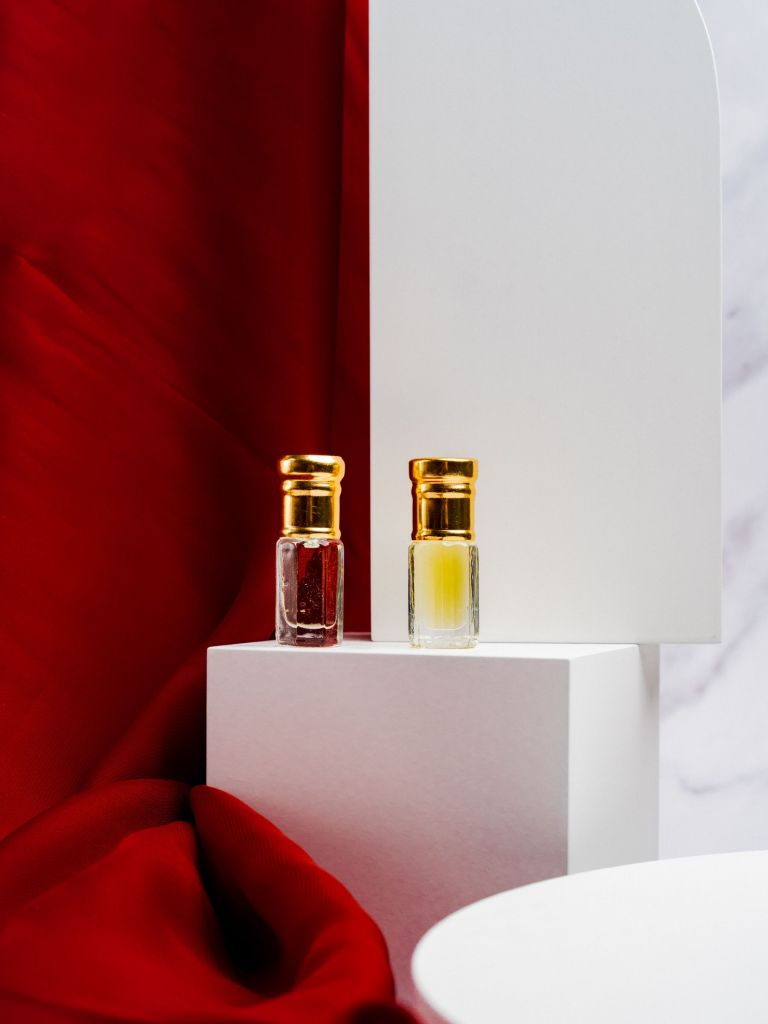
You do not need to master layering
Combining perfumes can be enjoyable, but it is optional. Start by understanding each fragrance on its own. Otherwise it becomes difficult to tell which element you like or why a combination feels overwhelming.
If you do experiment, try a small amount and avoid treating every scented body product as a necessary purchase. An unscented moisturiser can be a useful way to keep the perfume itself as the main scent in your routine.
Treat fragrance as you would lip colour: you can have a reliable favourite and occasionally choose a different effect. Our Clinique Black Honey review offers a familiar makeup example of an easy everyday option, while leaving plenty of room for other colours when you want them.
The collection can remain small. Keep bottles closed and follow the maker’s storage advice. Buy an amount you can realistically enjoy, rather than choosing the largest size simply because the price per millilitre looks better.
Frequently asked questions
How many perfumes make a fragrance wardrobe?
There is no set number. Two contrasting scents can provide useful choice. Samples can add variety without requiring more full-sized bottles.
Do I have to abandon my signature scent?
No. Keep wearing it if you love it. A fragrance wardrobe simply gives you other options for days when you want them.
Should I buy an eau de parfum instead of an eau de toilette?
Choose the exact version you prefer after sampling. The concentration label alone does not tell you whether the scent will suit your taste, routine or budget.
Can I blind-buy perfume from its notes?
A note list can guide curiosity but cannot reproduce the finished scent. Sampling is a more useful way to judge whether you enjoy wearing it.
Where to next: What to Read Next
Explore The Classic Wardrobe 101 for the same thoughtful approach to choosing useful foundations.
Then read How to Look Expensive on a Normal Budget for more on making personal choices that feel considered without assuming a higher price is the goal.

Leave a Reply