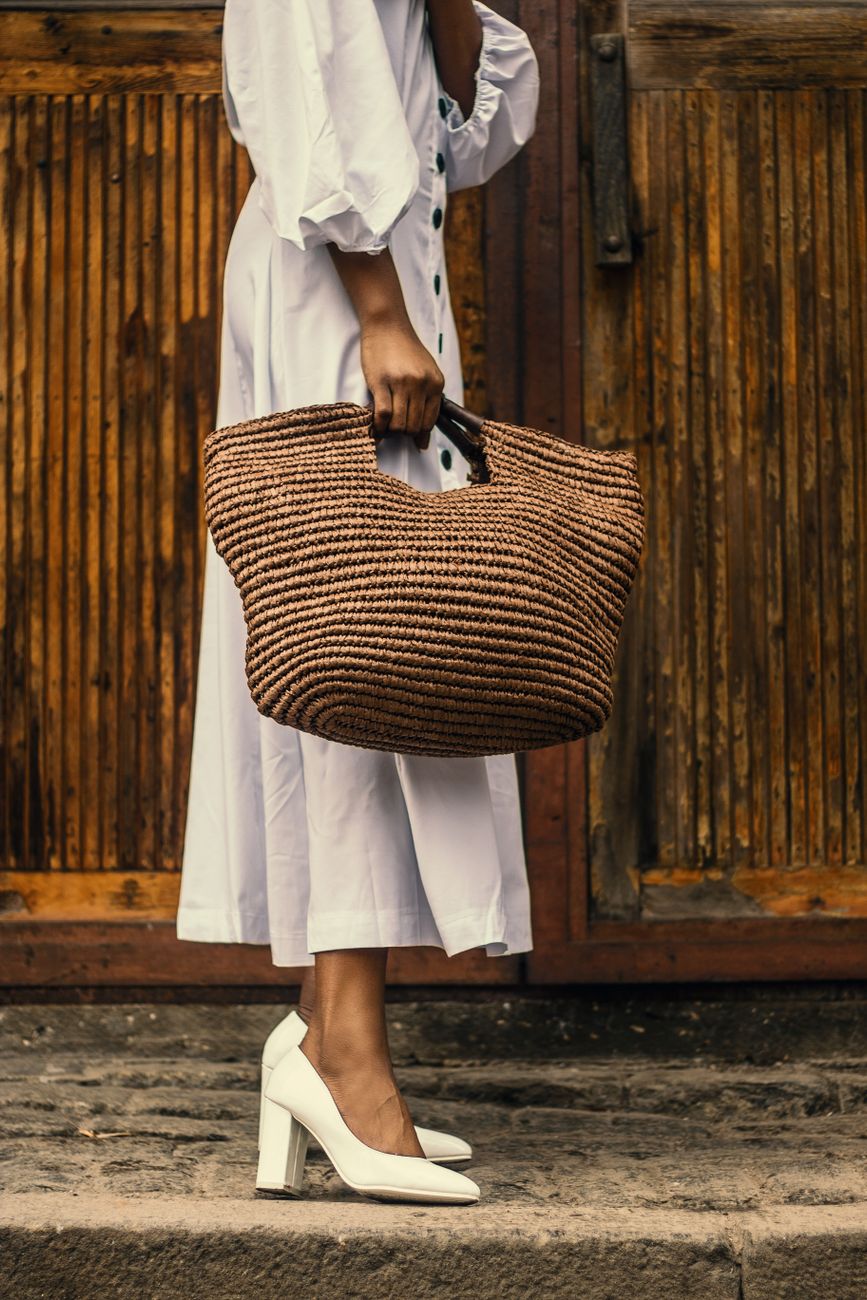
An outfit can be perfectly nice and still feel like it is missing something.
The trousers fit. The top works. The shoes are practical. Yet somehow the whole look does not quite feel finished.
Usually, the missing piece is not another item of clothing. It is the accessories.
Jewellery, bags, belts, shoes, sunglasses and even the smallest details can completely change the personality of an outfit. The same white shirt and jeans can feel minimal with delicate gold jewellery and ballet flats, polished with a structured bag and loafers, or relaxed with sneakers and a slouchy tote.
The trick is knowing how much to add, what to combine and when to stop.
Accessorising well is not about wearing more. It is about making the pieces you already own work harder.
If you are building a wardrobe that feels cohesive rather than crowded, our guide to How to Build a Wardrobe From Scratch, The Grown-Up Guide to Clothes You Actually Wear is a useful place to start.
Why Accessories Matter More Than You Think
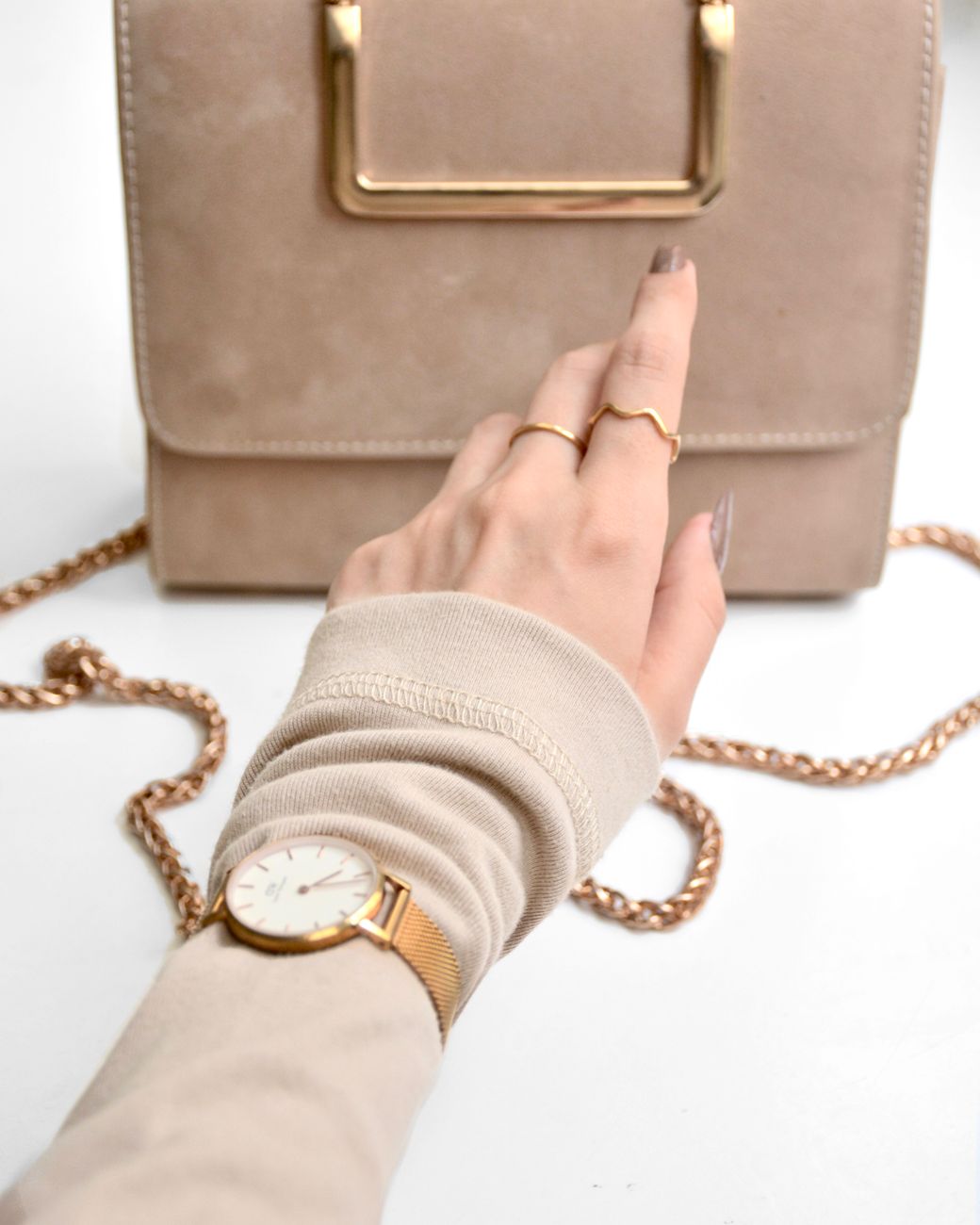
Clothes create the foundation of an outfit, but accessories often determine how that outfit feels.
A simple black dress can become:
Elegant with pearl earrings, a clutch and pointed heels.
Casual with a denim jacket, sneakers and a crossbody bag.
Modern with sculptural jewellery, a sleek bag and flat sandals.
Romantic with a silk scarf, delicate earrings and ballet flats.
The clothing has barely changed. The accessories have changed the message.
This is why accessories are such a useful part of a grown-up wardrobe. They allow you to repeat your favourite clothes without making every outfit look identical.
Start With the Outfit, Not the Accessories
One of the easiest mistakes is choosing accessories before considering the outfit itself.
Instead, get dressed first.
Look at the overall silhouette, colour palette and occasion. Then decide what the outfit needs.
Ask yourself:
Does the outfit need more structure?
Does it need colour?
Does it need contrast?
Does it need something softer?
Does it already have enough going on?
For example, a printed dress may only need simple earrings and a clean pair of shoes. A plain knit and trousers might benefit from a beautiful belt, statement earrings or an interesting bag.
The goal is balance.
The Three Questions to Ask Before Accessorising
Before adding anything, ask three simple questions.
What Is the Focal Point?
Every outfit benefits from having somewhere for the eye to land.
That could be a beautiful necklace, a colourful bag, dramatic earrings, a statement shoe or simply a strong silhouette.
If everything is competing for attention, nothing becomes the focal point.
What Does the Outfit Need?
If your outfit feels flat, add texture or colour.
If it feels too busy, simplify.
If it feels shapeless, add a belt.
If it feels too casual, introduce a structured bag or polished shoes.
If it feels too formal, add something relaxed such as sneakers, a casual watch or a softer bag.
Where Are You Going?
Accessories should make sense for the occasion.
The jewellery you wear to dinner may not be what you choose for a day of errands. A structured tote can work beautifully for work, while a tiny shoulder bag may be better for an evening out.
Good accessorising is practical as well as beautiful.
How to Accessorise With Jewellery
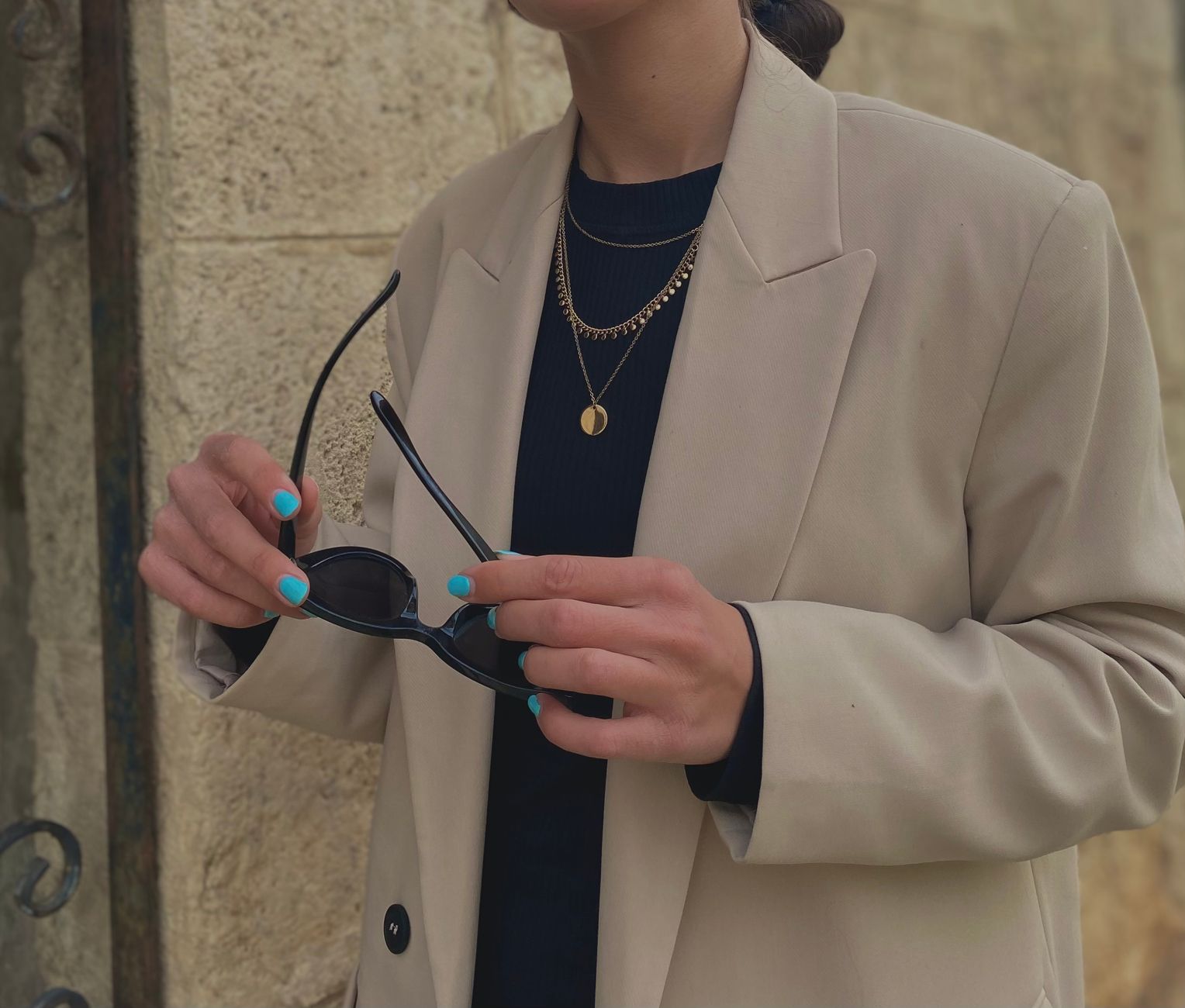
Jewellery is often the easiest place to start because small changes can have a big impact.
You do not need a huge jewellery collection. A few pieces that work with your wardrobe can take you surprisingly far.
Build a Simple Jewellery Foundation
A useful everyday collection might include:
Gold or silver hoops
Small everyday studs
A delicate necklace
One slightly stronger necklace
A simple bracelet or watch
A few rings
One pair of statement earrings
A classic pair of pearls if they suit your style
The aim is not to own every trend. It is to have pieces that make your existing clothes feel more complete.
How to Layer Necklaces
Layered necklaces can make a simple top feel much more styled.
The easiest way to do it is to vary the lengths.
Try:
A short chain + medium pendant + longer fine chain
Or keep it even simpler with two necklaces that have slightly different lengths.
Layering works particularly well with:
Open necklines
V-neck tops
Simple T-shirts
Tank tops
Slip dresses
White shirts
If your outfit already has a high neckline, statement earrings may be a better choice than several necklaces.
For more inspiration on making simple wardrobe staples feel more intentional, see How to Style a White Shirt, The Ultimate Guide to Making the Classic Wardrobe Staple Feel Fresh.
Gold or Silver Jewellery?
There are no strict rules.
Gold tends to feel warm, classic and luxurious.
Silver often feels cooler, cleaner and more contemporary.
If you already know which metal makes your skin look brighter, use that as your starting point.
If both work, you can absolutely mix them.
The key is making the combination look intentional. Repeating the mixed-metal idea across earrings, rings or bracelets helps it feel cohesive rather than accidental.
If you are unsure which jewellery tones work best with your complexion, How to Wear Gold for Every Skin Tone, The Complete Guide to Finding Your Most Flattering Shade is worth reading.
How to Choose the Right Bag
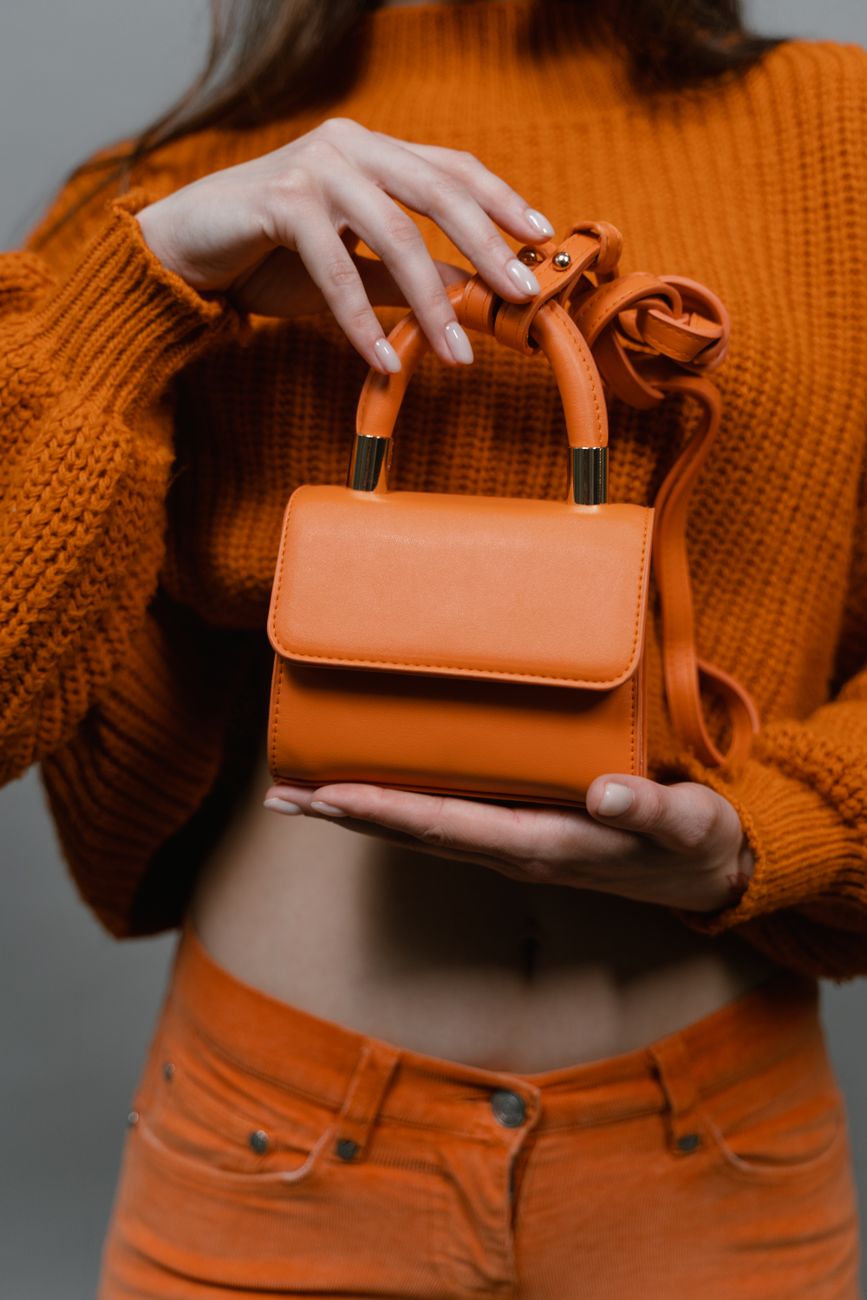
A bag is both practical and visual.
It can change the proportions of an outfit, introduce colour or make a casual look feel more polished.
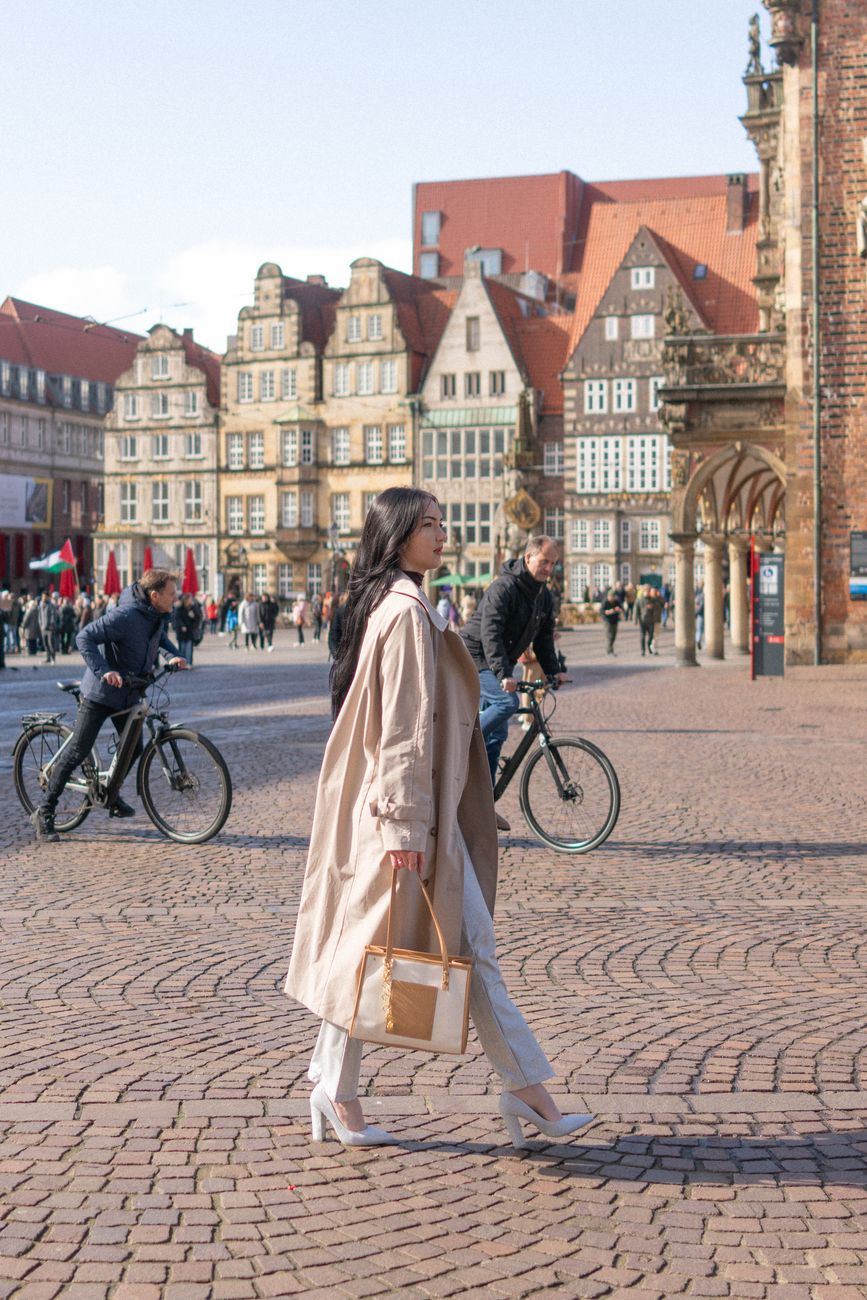
The Structured Bag
A structured bag immediately adds polish.
It works particularly well with:
Tailoring
Workwear
Dresses
Blazers
Straight-leg trousers
Minimal outfits
A structured bag can also make inexpensive or very simple clothing look more considered.
The Slouchy Bag
A softer, relaxed bag gives an outfit a more casual feeling.
Try it with:
Jeans
Knitwear
Sneakers
Relaxed trousers
Denim jackets
Weekend outfits
The contrast between a structured outfit and a relaxed bag can also be very stylish.
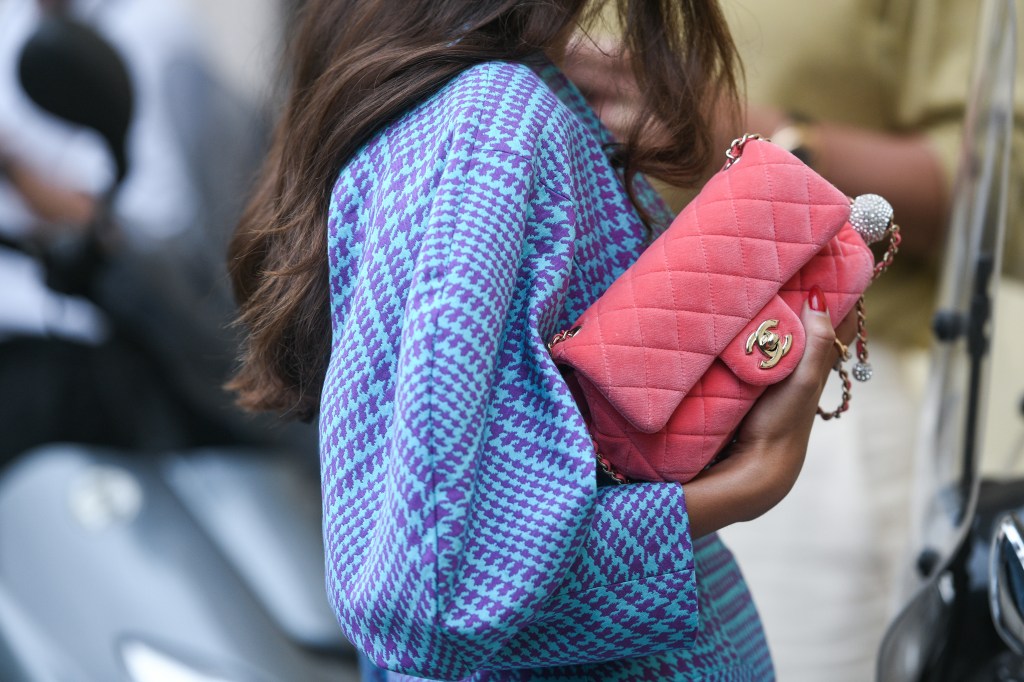
The Small Shoulder Bag
A small shoulder bag is ideal when you do not want your accessories to dominate.
It works especially well for dinners, weekends, travel and evenings.
Choose a neutral shade if you want maximum versatility, or use a strong colour if the rest of your outfit is simple.
How to Match Your Bag
Your bag does not have to match your shoes exactly.
In fact, matching everything perfectly can sometimes make an outfit feel dated.
Instead, look for a visual relationship.
A tan bag can work with gold jewellery.
A burgundy bag can pick up a lipstick or knit.
A black bag can anchor a lighter outfit.
A chocolate bag can connect beautifully with camel, cream, denim and warm neutrals.
Think coordination rather than matching.
How to Use Belts to Improve an Outfit
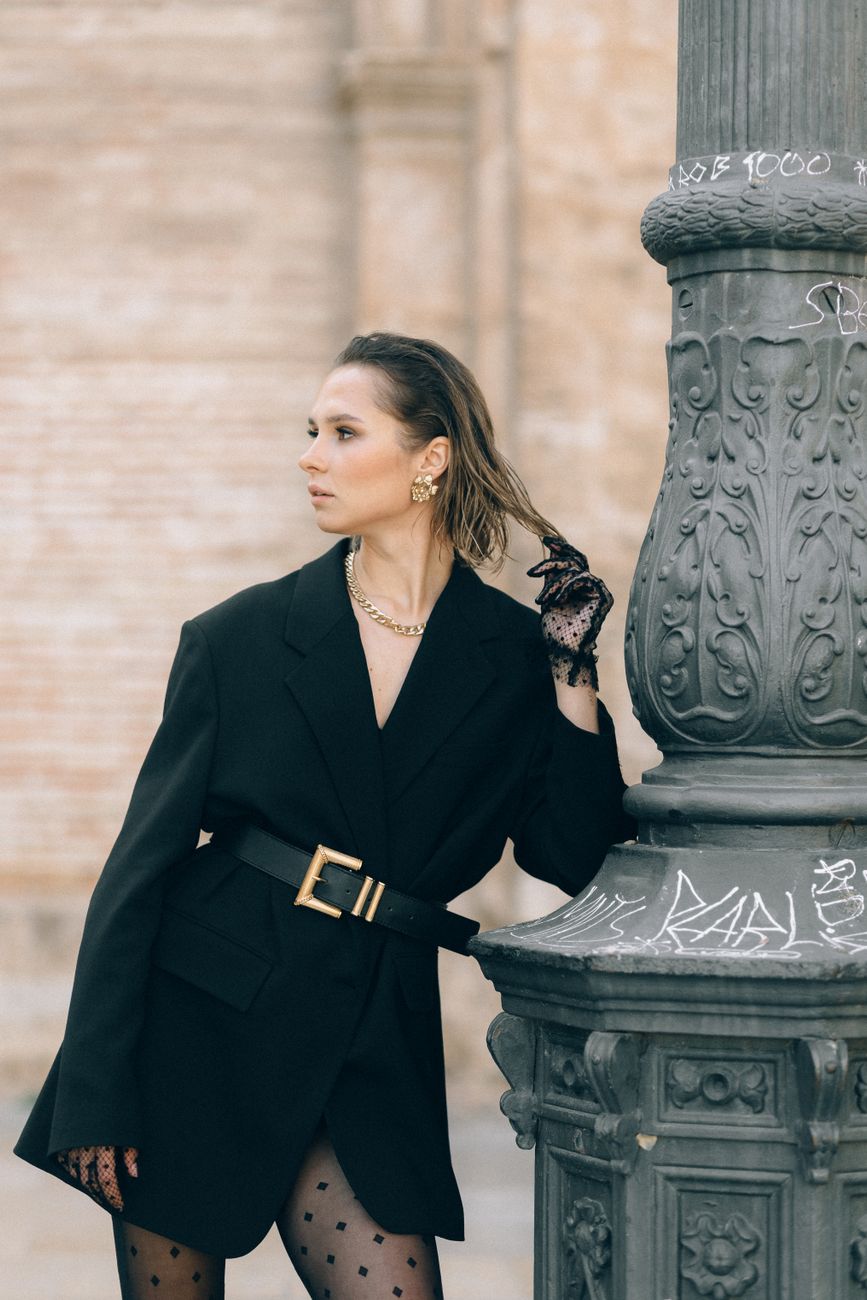
Belts are one of the most underrated accessories in a wardrobe.
They can define your waist, break up a monochrome outfit, add structure and make an outfit feel finished.
Belt With Jeans
A leather belt can instantly make jeans and a simple top look more intentional.
Try:
Straight-leg jeans + white shirt + brown belt + loafers
Or:
Jeans + fitted knit + black belt + ballet flats
Belt With Trousers
A belt is particularly useful with high-waisted trousers.
Choose a slim belt for a subtle finish or a slightly wider belt when you want it to become part of the outfit.
Black trousers with a black belt create a long, streamlined line.
Tan or brown belts create more contrast and can make an otherwise simple outfit feel warmer.
For more ideas on styling tailored bottoms, read How to Style Black Trousers, 15 Outfits That Work for Almost Everything.
Belt Over a Dress or Blazer
A belt can change the shape of a dress completely.
It can also work over a blazer or long cardigan when you want to create more definition.
The trick is not to belt everything.
If the garment already has a strong waist or interesting shape, adding another line may make the outfit feel unnecessarily busy.
Shoes Can Change the Entire Outfit
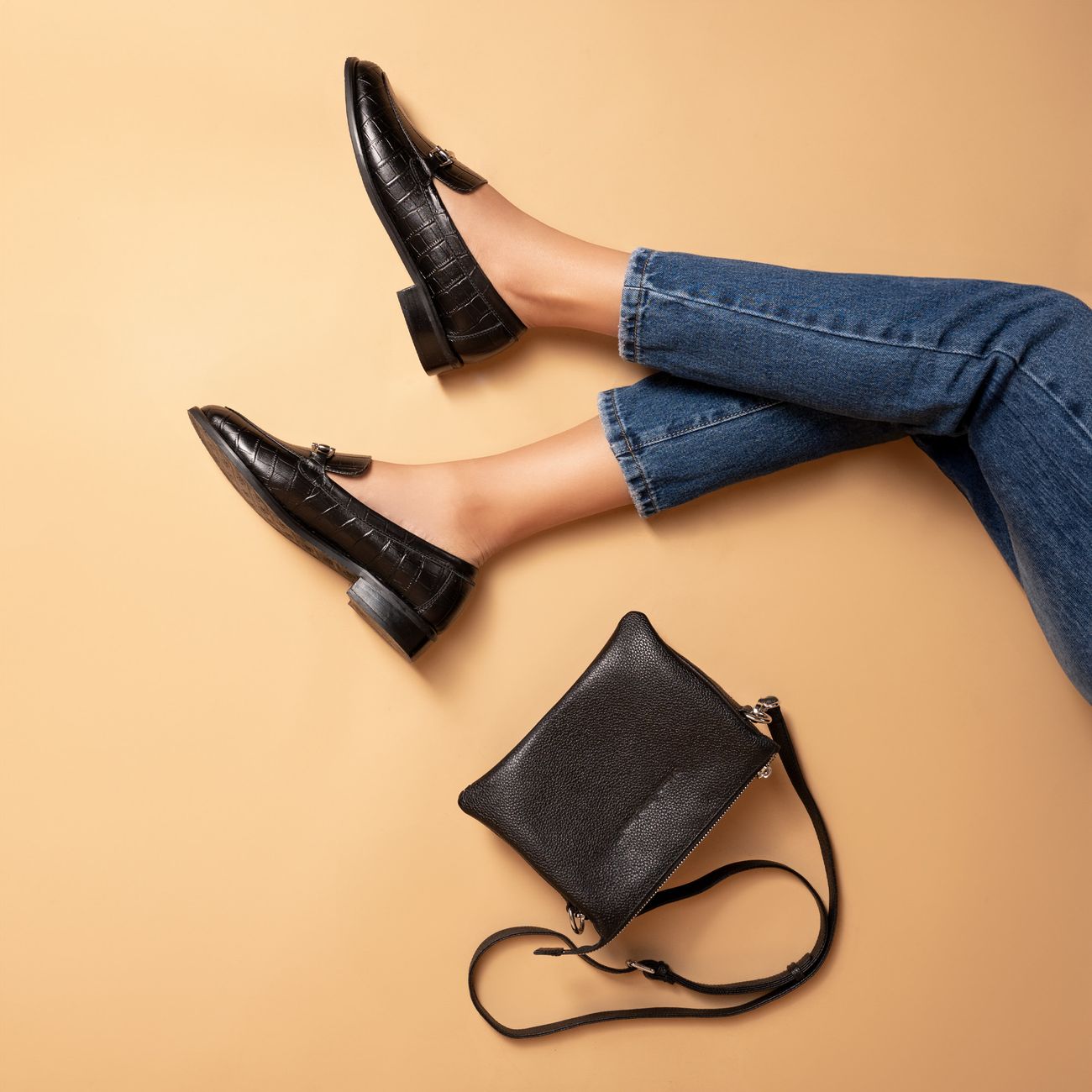
Shoes are often the accessory that changes an outfit most dramatically.
The same trousers can look completely different with sneakers, ballet flats, loafers or heels.
Sneakers
Sneakers make outfits feel modern, relaxed and practical.
Try them with:
Tailored trousers
Midi skirts
Dresses
Straight-leg jeans
Blazers
Wide-leg trousers
A clean, minimal sneaker is particularly versatile.
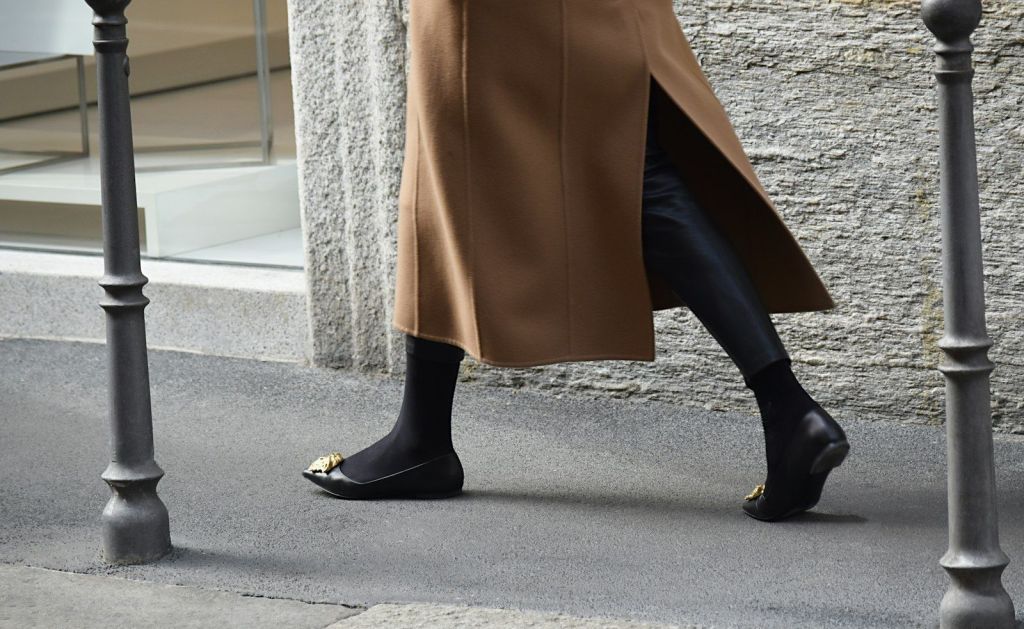
Ballet Flats
Ballet flats create a softer, more feminine look.
They work beautifully with:
Cropped trousers
Straight-leg jeans
Midi skirts
Dresses
Tailored trousers
For more ideas, our guide to How to Style Ballet Flats Without Looking Frumpy explores how to keep flats polished and modern.
Loafers
Loafers sit somewhere between casual and formal.
They are ideal when you want an outfit to look polished without wearing heels.
Try loafers with tailored trousers, jeans, midi skirts, shorts or dresses.
Black leather feels classic.
Brown or burgundy feels softer.
A metallic or embellished pair can become the statement piece of an otherwise simple outfit.
Heels
Heels immediately create a more elevated feeling.
You do not necessarily need a high heel.
A kitten heel, slingback or low block heel can create the same sense of polish while remaining practical.
How to Accessorise Different Necklines
The neckline of your top or dress can help determine which jewellery works best.
Crew Neck
A crew neck creates a natural space for a necklace.
Try a short pendant or layered chains.
Alternatively, skip the necklace and choose statement earrings.
V-Neck
A delicate pendant can echo the shape of the neckline.
Avoid overly heavy jewellery if the neckline is already deep and dramatic.
High Neck
High necks often look better with earrings rather than necklaces.
Try:
Hoops
Studs
Statement earrings
Drop earrings
A watch or bracelet can also add interest without crowding the neckline.
Strapless or Off-Shoulder
This is an excellent opportunity for a necklace.
A statement necklace can work beautifully, but so can a delicate chain if you want something understated.
Alternatively, let the neckline speak for itself and choose dramatic earrings instead.
How to Accessorise a Monochrome Outfit
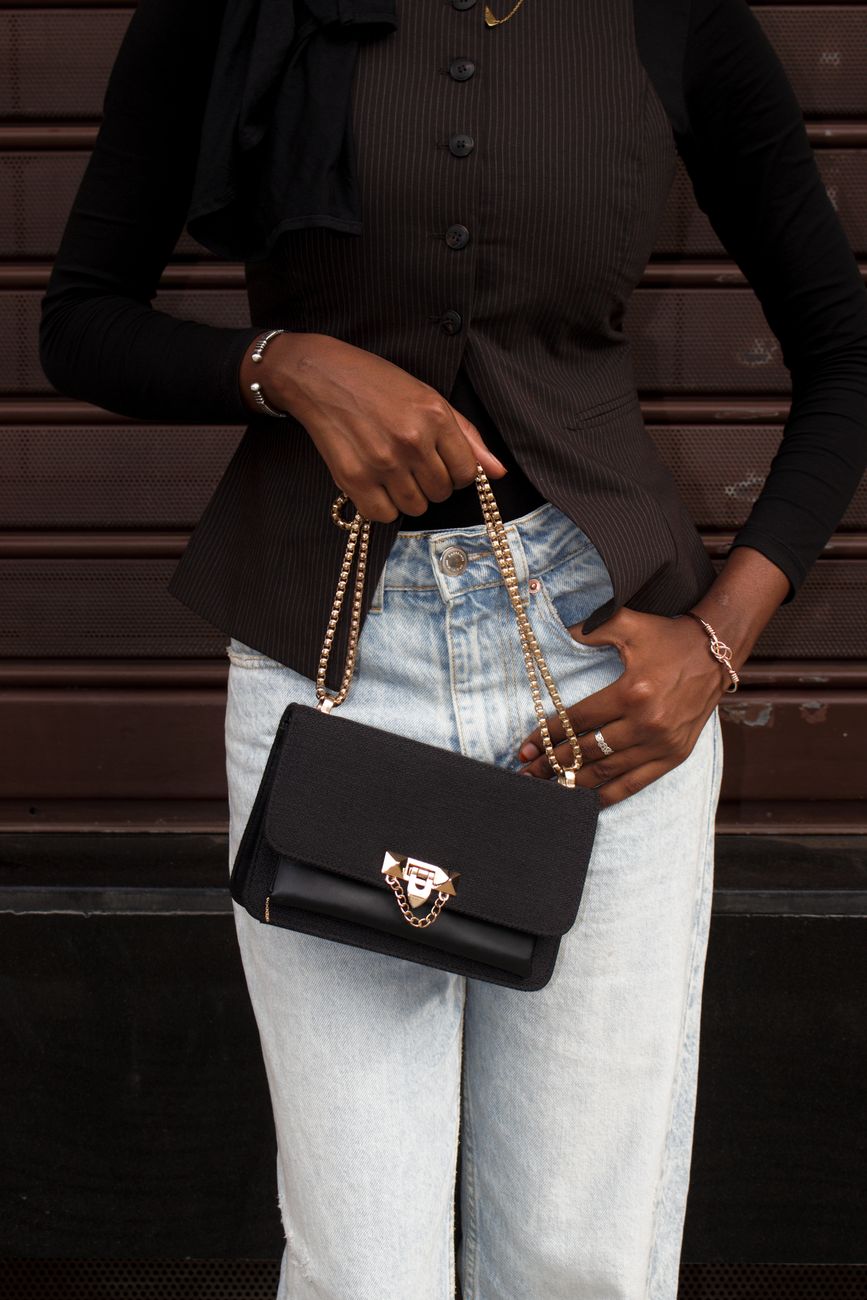
Monochrome outfits are one of the easiest ways to make accessories stand out.
If you are wearing all black, for example, you can introduce:
Gold jewellery
A burgundy bag
A tan belt
Metallic shoes
A colourful scarf
Statement sunglasses
The same principle works with cream, navy, brown and grey.
You do not need to introduce lots of colours.
One carefully chosen accent is often enough.
If you love working with rich neutrals, our guide to How to Wear Brown for Every Skin Tone, Chocolate, Camel, Tan and Espresso has more ideas for creating depth with warm shades.
How to Accessorise a Simple Outfit
A simple outfit is actually one of the best opportunities to experiment with accessories.
Imagine:
White T-shirt + black trousers + loafers
Now change the accessories.
Version One, Minimal
Small gold hoops + black belt + structured black bag
Version Two, Relaxed
White sneakers + crossbody bag + sunglasses
Version Three, Feminine
Ballet flats + pearl earrings + small shoulder bag
Version Four, Statement
Red bag + gold earrings + pointed shoes
The clothing stays almost identical.
The accessories create four completely different outfits.
How Many Accessories Should You Wear?
There is no magic number.
Instead, think about visual weight.
If you are wearing statement earrings, you may not need a statement necklace.
If your shoes are dramatic, keep the bag simple.
If your handbag is colourful, keep the jewellery quieter.
If your outfit is very minimal, you can add more interest through accessories.
A useful rule is to choose one main statement and let everything else support it.
How to Accessorise Without Looking Overdone
The easiest way to avoid over-accessorising is to remove one thing before you leave the house.
Look at yourself in the mirror.
If you notice the earrings, necklace, belt, bag and shoes all competing for attention, take one away.
Accessories should make the outfit feel more intentional, not more complicated.
Use Repetition
Repeating a colour or material helps accessories look connected.
For example:
Gold earrings + gold watch
Brown belt + brown bag
Black shoes + black bag
Burgundy bag + burgundy lipstick
Silver earrings + silver buckle
This creates cohesion without requiring everything to match.
How to Accessorise for Work
Work accessories should generally be polished, practical and comfortable.
A strong office combination might be:
Tailored trousers + blouse + blazer + loafers + structured bag + simple jewellery
For a more modern office outfit, try:
Wide-leg trousers + fitted knit + low heels + sculptural earrings + shoulder bag
Keep the number of statement pieces relatively low.
One strong accessory is often enough.
If you are updating your work wardrobe, What Does the Dress Code Mean? A Complete Guide to Dressing for Every Occasion can help you work out how formal your accessories should be for different settings.
How to Accessorise for a Casual Outfit
Casual does not have to mean unfinished.
Try:
Jeans + T-shirt + sneakers + belt + sunglasses
Or:
Relaxed trousers + knit + loafers + shoulder bag + simple jewellery
The trick is choosing accessories that look intentional while still feeling comfortable.
A structured bag can elevate casual clothing.
A belt can add definition.
Jewellery can make basics feel more personal.
Good shoes can make the entire outfit look considered.
How to Accessorise for an Evening Outfit
Evening accessories can be more dramatic.
Try:
Statement earrings
Metallic shoes
A small clutch
A bold bracelet
A delicate layered necklace
A sculptural bag
You do not need all of them.
For a simple black dress, statement earrings and a beautiful clutch may be enough.
For a minimalist trouser outfit, a silk camisole, heels and dramatic jewellery can completely transform the look.
How to Mix Textures Through Accessories
Accessories are a great way to add texture without changing your clothes.
Try:
Leather bag + silk blouse
Suede shoes + knitwear
Gold jewellery + satin
Woven bag + linen
Patent shoes + matte tailoring
Pearls + denim
Leather belt + soft knit
Texture is particularly important in monochrome outfits because it prevents the look from feeling flat.
How to Make Accessories Look More Expensive
You do not need designer accessories to create a polished outfit.
Focus on:
Clean shapes
Minimal branding
Good proportions
Simple hardware
Quality-looking textures
Well-maintained shoes
Structured bags
Classic colours
A simple leather belt with a clean buckle can look more sophisticated than a heavily branded designer-inspired belt.
The same applies to bags and jewellery.
If you want more practical ways to make your existing wardrobe feel elevated, read How to Look Expensive on a Normal Budget.
The Most Useful Accessories to Own
If you want to keep your accessory collection practical, start with these.
Jewellery
A pair of everyday hoops
Simple studs
A delicate necklace
A statement earring
A classic watch
Bags
A structured everyday bag
A relaxed tote
A small evening bag
A practical crossbody
Shoes
Loafers
Ballet flats
Clean sneakers
Ankle boots
A low heel or slingback
Belts
A black leather belt
A brown or tan belt
Other Accessories
Sunglasses
Silk scarf
Simple hair accessories
One statement scarf
These pieces can cover a huge range of outfits without creating an overcrowded wardrobe.
Accessory Formulas That Always Work
The Classic
Gold hoops + leather belt + loafers + structured bag
The Minimalist
Small studs + slim watch + ballet flats + clean shoulder bag
The Casual
Sunglasses + crossbody bag + sneakers + simple hoops
The Polished
Statement earrings + belt + pointed flats + structured bag
The Feminine
Pearl earrings + ballet flats + small shoulder bag
The Evening
Statement earrings + clutch + heels
The Modern
Sculptural earrings + oversized bag + sleek flats
The Weekend
Sunglasses + relaxed tote + sneakers + simple jewellery
Common Accessorising Mistakes
Matching Everything Exactly
Your shoes, belt and bag do not have to be identical.
Coordination usually looks more modern than perfect matching.
Wearing Too Many Statement Pieces
If everything is designed to attract attention, nothing stands out.
Choose one focal point.
Ignoring Proportion
A tiny bag can disappear against an oversized coat.
A huge statement necklace can overwhelm a delicate neckline.
Think about the scale of the accessories in relation to the outfit.
Forgetting the Occasion
Beautiful evening jewellery may not make sense for a casual daytime outfit.
Accessories should fit the situation as well as the clothes.
Adding Accessories Just Because You Can
Sometimes the best accessory is no accessory at all.
If your outfit already has strong colour, print, texture or shape, let it breathe.
How to Build a Personal Accessory Style
The best accessorising is not about following every trend.
It is about discovering the details that make you feel like yourself.
Maybe you always wear gold hoops.
Maybe you love structured bags.
Maybe ballet flats are your signature.
Maybe you never leave the house without sunglasses.
Maybe your wardrobe is simple but your jewellery is dramatic.
That is personal style.
Start noticing the accessories you reach for repeatedly. Those are clues to your signature.
Over time, you can build a collection around them rather than constantly buying something new.
The Final Rule, Make It Feel Like You
Accessories should make getting dressed easier, not more complicated.
You do not need a huge collection of jewellery, dozens of handbags or a wardrobe full of shoes.
A few thoughtful pieces can completely change what you already own.
The best accessory is ultimately the one that makes you feel more like yourself when you put it on.
FAQs
What is the easiest way to accessorise an outfit?
Start with one focal point. Choose statement earrings, a beautiful bag, a belt, interesting shoes or a necklace, then keep the remaining accessories simple.
Should your bag match your shoes?
No. Your bag and shoes can coordinate without matching exactly. Repeating a colour, material or metal detail is often enough to make them feel connected.
How many accessories should you wear at once?
There is no fixed number. Focus on balance. If one accessory is dramatic, allow the others to support it rather than compete with it.
Is gold or silver jewellery more versatile?
Both can be versatile. Gold tends to feel warmer, while silver feels cooler and more modern. Choose based on your colouring and personal style.
How can I make a simple outfit look more stylish?
Add one or two intentional accessories. A belt, structured bag, statement earrings or polished shoes can completely change a basic outfit.
Can you mix gold and silver jewellery?
Yes. Mixing metals can look modern when it feels intentional. Repeat the mixed-metal combination across several pieces so it looks cohesive.
How do I accessorise an all-black outfit?
Use accessories to introduce texture, shine or a subtle colour accent. Gold jewellery, a burgundy bag, tan belt, metallic shoes or a silk scarf can all work beautifully.
What accessories make an outfit look expensive?
Simple jewellery, clean leather bags, structured shapes, minimal branding, polished shoes and well-chosen belts can make an outfit feel more elevated.
What accessories should every woman own?
A few everyday jewellery pieces, a structured bag, a crossbody, loafers, ballet flats, sneakers, ankle boots, a black belt, a brown or tan belt and sunglasses create a strong starting collection.
How do I accessorise without looking overdone?
Choose one main statement and keep the rest of the accessories quieter. Before leaving the house, remove one piece if the outfit feels too busy.
Where to Next?
If you are ready to build a wardrobe where every piece has a purpose, continue with The Classic Wardrobe 101, The Timeless Pieces Every Woman Should Own. It is a useful guide to the foundational clothing and accessories that make everyday dressing easier.
If your wardrobe feels full but outfits still do not come together easily, read Common Wardrobe Mistakes That Make You Look Less Polished, And How to Fix Them. Small styling changes can often make a bigger difference than buying more clothes.
For anyone trying to make classic pieces feel less predictable, How to Wear Blue for Every Skin Tone, The Complete Guide to Finding Your Most Flattering Shade is a useful next read, especially if you want to introduce more colour through clothing and accessories.
If you are refining your wardrobe after a major style reset, How to Rebuild Your Wardrobe After 40, A Grown-Up Guide to Dressing With Confidence offers a thoughtful approach to choosing pieces based on real life rather than trends.
And if you want to understand how accessories fit into different levels of formality, What Does the Dress Code Mean? A Complete Guide to Dressing for Every Occasion is the perfect final read.


Leave a Reply