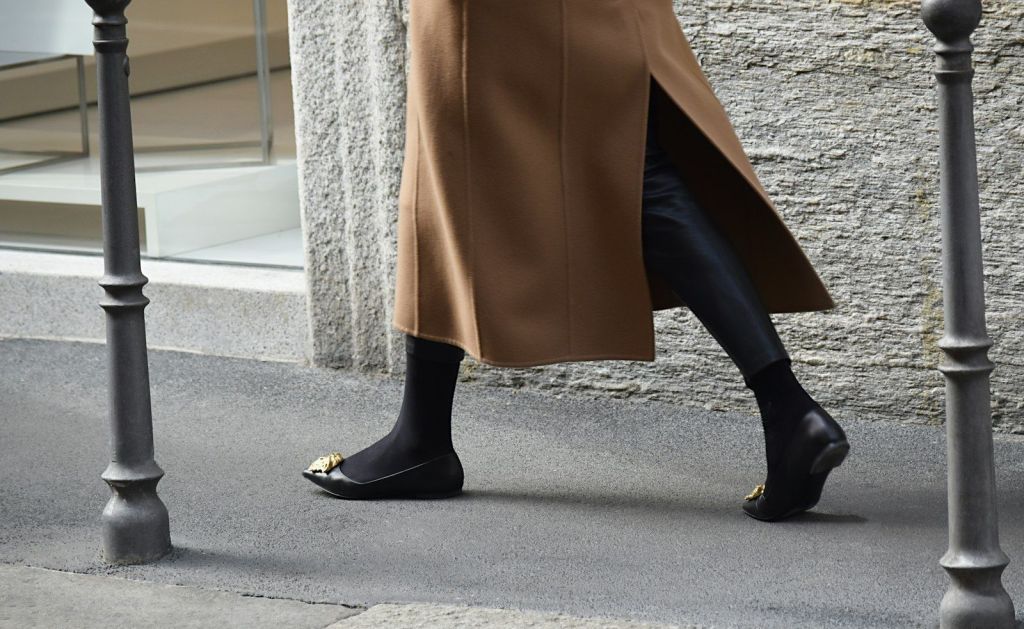
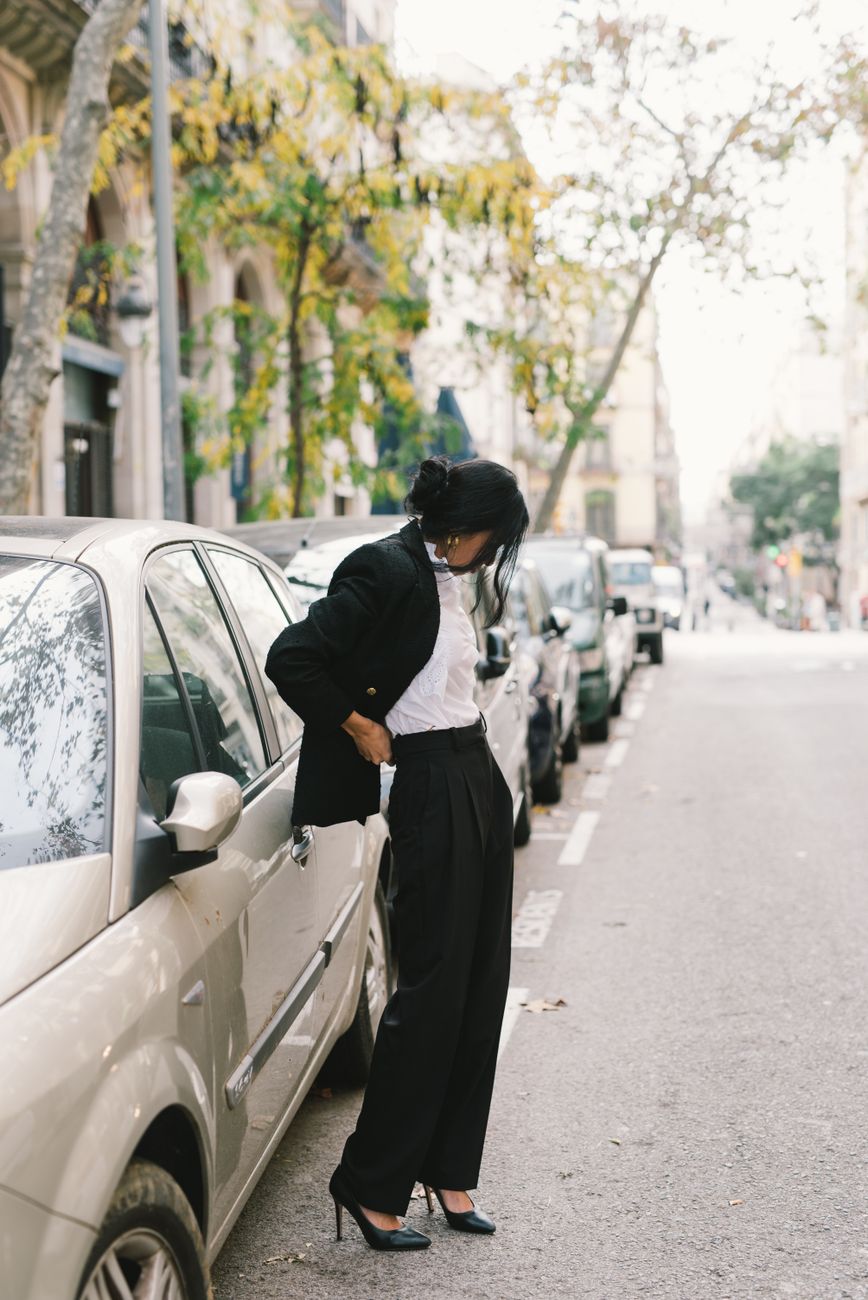
There is a particular kind of confidence in arriving for dinner in beautiful flats. The outfit still has intention: trousers that fall properly, a jacket with a good shoulder, perhaps an earring that catches the light. But the shoes suggest that the evening belongs to you, including the walk home. Heels can be wonderful. They simply no longer have to carry the entire responsibility for making an outfit feel dressed.
The most interesting alternatives to heels work because they bring something of their own. A soft ballet flat adds delicacy to a strong suit. A substantial loafer gives a floaty skirt some friction. A narrow sneaker makes a long dress feel more lived in. When the choice is deliberate, lowering the heel can sharpen the styling rather than soften its impact.
There is a timely fashion context, too. has highlighted soft ballet flats, streamlined loafers and backless variations, alongside a renewed interest in lace-up shoes. The useful takeaway is the breadth of the choice. You can build a polished shoe wardrobe around different shapes, textures and occasions without treating a pair of stilettos as the compulsory final step.
Why flat shoes feel so right now
The shift towards flatter footwear changes the outline of an outfit. Without the pitch of a high heel, trousers settle differently, skirts acquire a more grounded feel and tailoring can lose some of its formality. This is why simply swapping shoes beneath an outfit designed around heels sometimes disappoints. The replacement needs to be considered alongside the hem, the volume of the clothes and the amount of shoe on show.
Think of flat shoes instead of heels as a styling opportunity. If your trousers are generous, a visible toe or a more substantial sole can give them an ending. If your dress has movement and softness, a clean shoe can provide definition. Separate the pair you need for everyday wear from a shoe chosen for one particular outfit, and let that distinction guide what you try first.
The soft ballet flat: a lighter finish for tailoring
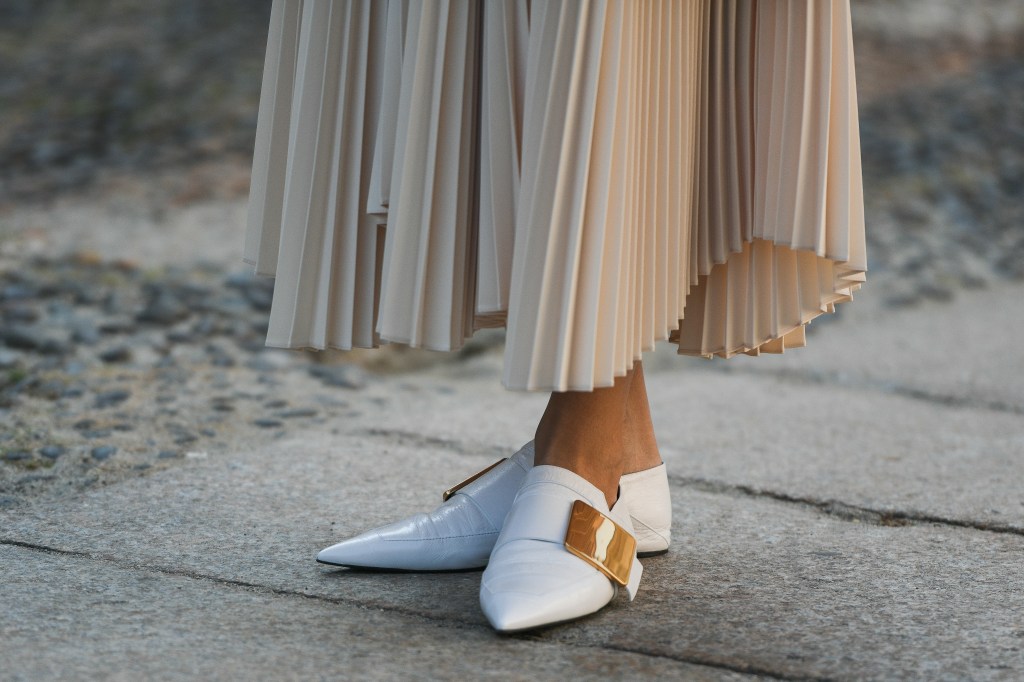
The appeal of a ballet flat is its small footprint. It sits close to the foot and leaves the clothes in charge, which makes it particularly useful with pleated trousers, straight jeans and skirts with a little movement. A supple upper, a neat topline and a toe shape you enjoy looking at matter more than the presence of a bow. A rounded toe feels gentle; an almond or pointed shape gives a clearer, more graphic finish.
Choose the version that relates to your wardrobe. Black works beautifully with a dark trouser and pale shirt, while chocolate or tan can sit more softly against cream, denim and olive. A metallic pair can function almost like jewellery beneath an otherwise simple evening outfit. Mesh and open constructions need a little more consideration: look at what will show through, how the edges sit and whether the shoe suits the weather and the ground you will be walking on.
Make the hem work with the shoe
Try straight jeans that finish near the ankle, a fine knit and a jacket with enough structure to offset the lightness of the flat. With wide trousers, check that the hem clears the floor and that the shoe has not disappeared altogether. A full-length skirt can work, too, especially when the upper half has a defined neckline or a compact jacket. Our guide to styling ballet flats explores those proportion changes in more detail.
The Mary Jane: a small strap with a distinct point of view
A flat Mary Jane introduces a little architecture across the foot. That strap gives the shoe character even when the rest of the outfit is spare, making it a satisfying option for people who find an unadorned ballerina too quiet. A single slender strap tends to feel restrained; multiple straps, contrast stitching or a square toe make the choice more noticeable. There is no need to add every decorative detail at once.
For daytime, place a simple pair beneath dark denim and a shirt with an open collar. For dinner, try a longer black skirt and a fine knit, allowing the strap to become the only overtly pretty detail. Socks can be part of the look, but choose their weight deliberately: a fine dark sock blends into the shoe, while a pale ribbed one creates a visible break. Either approach works better when you have considered the skirt or trouser length around it.
The practical test is the fastening. The strap should hold the foot without biting when you sit, bend or walk, and the toe box should have enough room to move comfortably. A charming shoe that demands constant adjustment is unlikely to become your everyday answer to heels. Try both shoes on and walk around before deciding; the right visual shape still has to work on your feet.
The loafer: polish with a little weight behind it
A loafer has enough substance to anchor an outfit, which explains its usefulness with clothes that would otherwise feel overly delicate or loose. The choice is largely about proportion. An elongated, low-profile loafer gives tailored trousers a smooth finish, while a thicker sole creates a stronger base under denim, a shorter skirt or a roomy jacket. Neither is inherently more fashionable. They make different shapes at the bottom of the outfit.
Black leather is dependable, but brown, burgundy or a muted colour can loosen the mood. Keep the rest of the outfit relatively calm if the shoe has prominent hardware, a heavy sole or an unusual finish. For work, try a fluid trouser, a tucked shirt and a loafer that shows beneath the hem. Our black trouser outfit ideas offer plenty of ways to vary that foundation without buying another complete look.
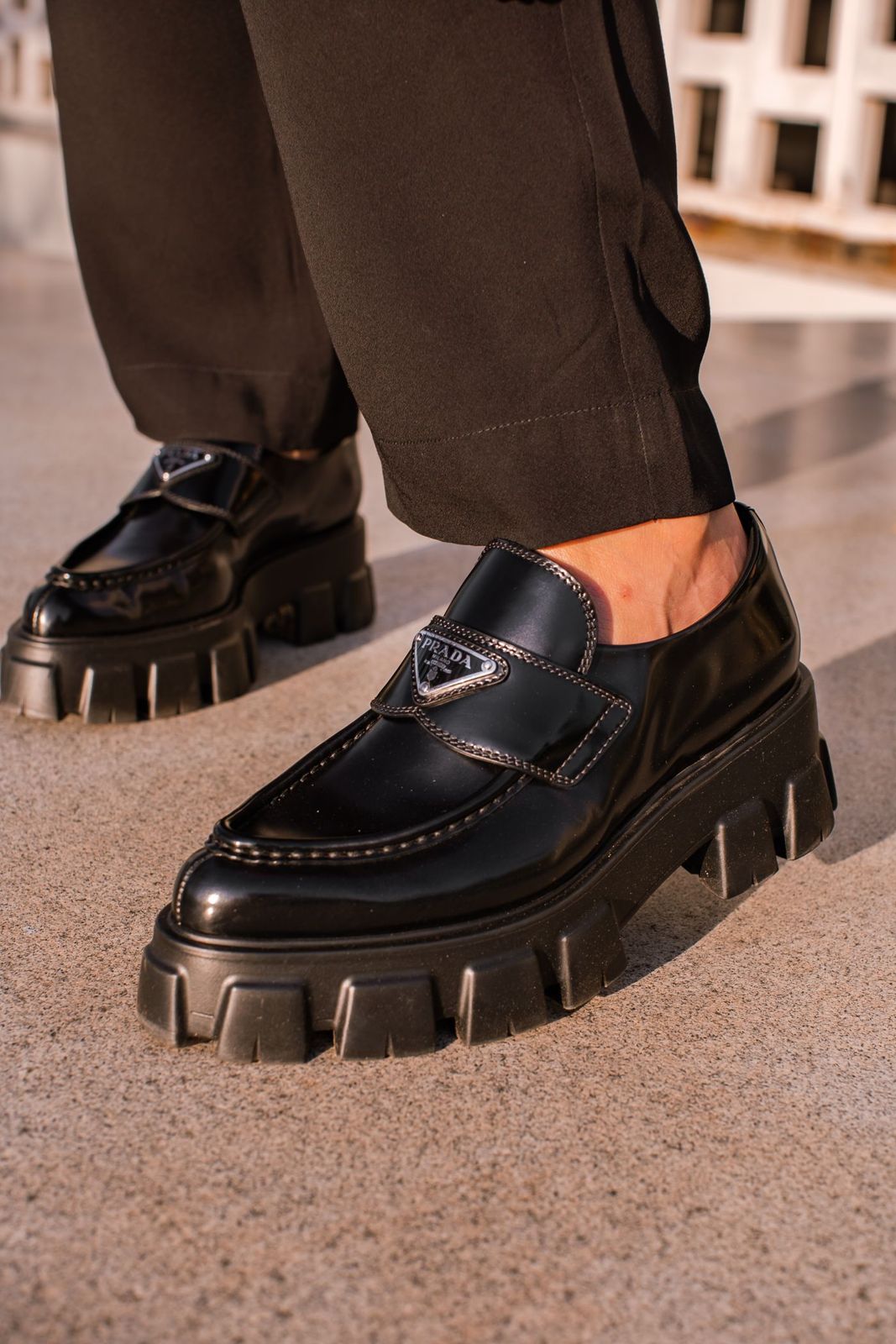
Open loafers offer a more relaxed variation. They are particularly appealing for a mild day or a dinner close to home, when you want the character of a loafer with an easier finish. For lengthy walks, stairs or a commute, check how securely the shoe stays on. A closed back may be the more useful choice if you find yourself gripping with your toes to keep a mule in place.
The derby or Oxford: the unexpected dress shoe
Lace-up shoes deserve a place in this conversation because they offer something a ballet flat cannot: a firmer, more deliberate line. A derby has open lacing, while an Oxford has a closed lacing construction. You do not need to become a footwear historian to wear either. The distinction worth noticing in the mirror is how the shoe’s toe, sole and upper relate to your trousers or skirt.
A restrained lace-up can look particularly good with a long skirt and a compact knit, or with loose trousers and a sleeveless top. The familiar menswear reference gives softer pieces a useful counterweight. Keep the trouser hem clear enough to reveal part of the shoe, rather than allowing several centimetres of fabric to gather over the laces. If the combination feels too formal, change the top to cotton or knitwear and leave the matching suit jacket behind.
The slim sneaker: ease without losing the outline
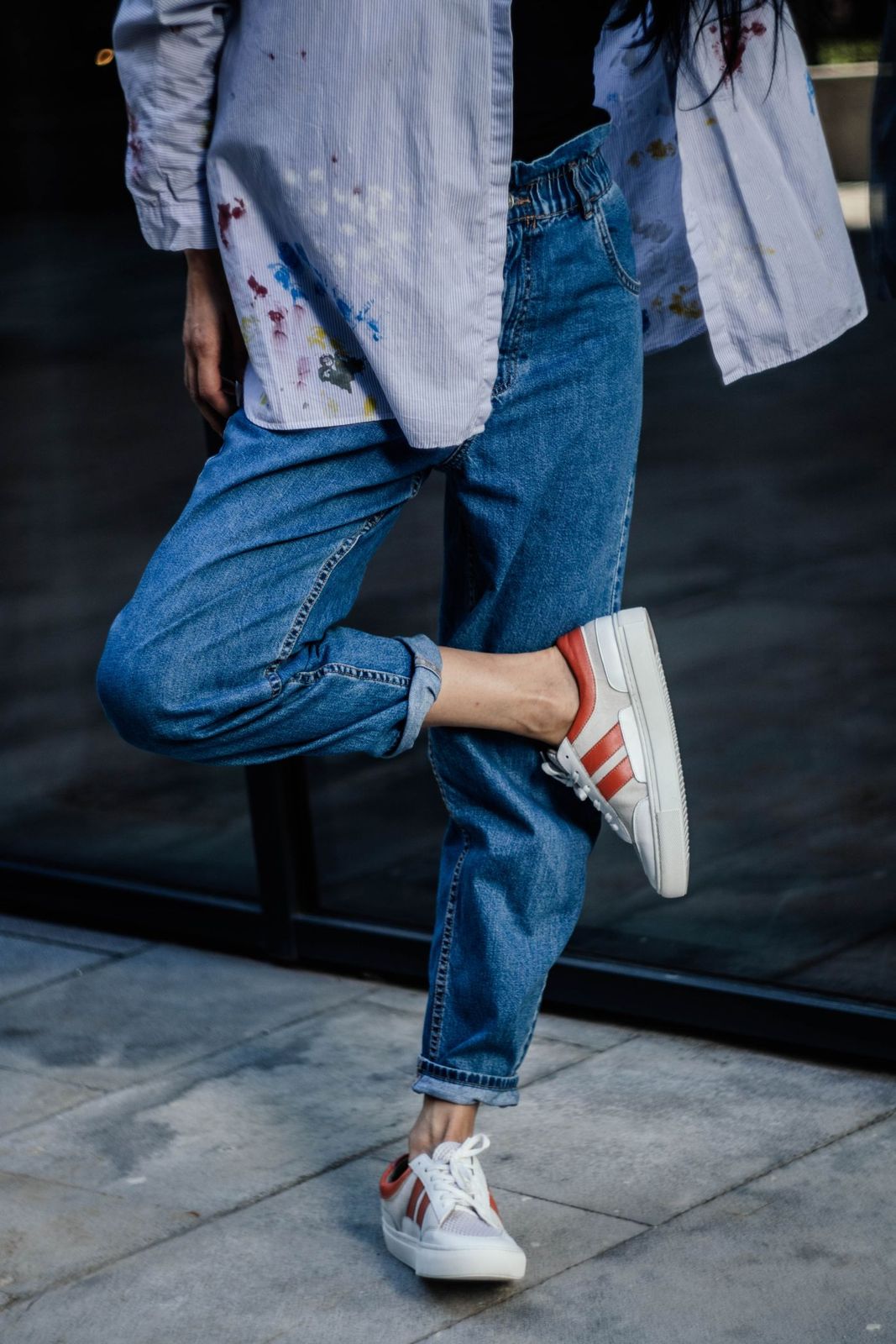
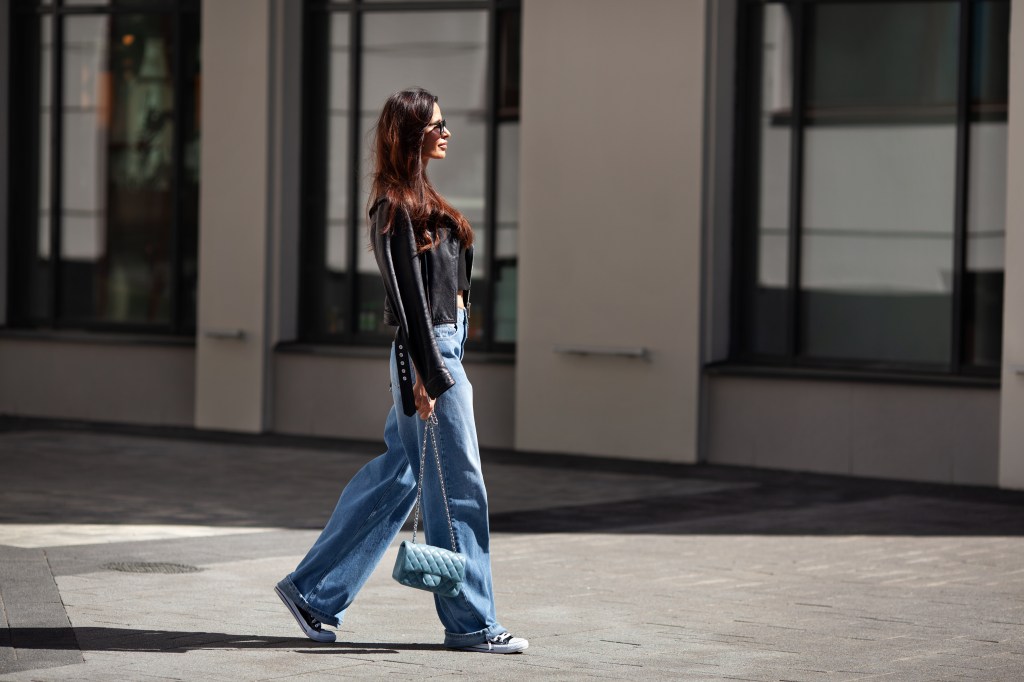
A lower-profile sneaker is useful when the clothes already have volume. It can sit beneath roomy denim, a long skirt or a relaxed suit without adding another large shape. Canvas brings a casual texture; a smooth leather upper looks cleaner; suede offers a softer finish. Choose the material for how you dress and where you will wear it, rather than assuming that white is always the most versatile option.
Colour can do some of the styling. A cream sneaker can soften black trousers, while a darker pair can continue the line of navy denim. A stripe or contrast panel gives a plain outfit a small point of interest. Look at the whole shoe before buying: a silhouette may be slim through the upper but still have a thick sole that changes how your hem sits.
To wear sneakers with tailoring, start with the trouser length. A clean break or a hem that skims the shoe looks more considered than fabric dragging behind the heel. Add a shirt with a little ease, or a simple knit beneath the jacket. Our guide to styling a white shirt is useful here, especially when you want the familiar shirt-and-trouser combination to feel relaxed enough for the shoes.
The flat sandal: a warm-weather alternative with presence
A flat sandal can carry an evening outfit if its lines are clear and the fit feels secure. Fine straps leave the dress or trousers in focus, while broader straps add a stronger graphic element. A back strap offers a different feel from a slide, and a shaped footbed creates a more casual outline than a thin sole. Choose the level of structure that makes sense for the outfit and the walking involved.
Try a simple flat sandal with a long column dress, a small bag and an earring with some shape. With linen trousers, allow the hem to hover above the ground so the shoe remains part of the look. If everything feels too beach-like for the occasion, add a tailored layer or change the bag to something compact and defined. The sandal can remain; the pieces around it can adjust the dressiness.
How to make an outfit feel dressed without heels
The most useful starting point is a single structured element: a good jacket, a trouser with a crisp crease, or a shirt that holds its shape. From there, notice the finish of the shoes and the visual weight of the accessories. You do not have to match every metal or repeat the same colour throughout, but the combination should have a clear centre of attention. ELE Styled’s guide to accessorising like a stylist is a helpful next step when the clothes are right and the outfit still feels unfinished.
For evening, texture often does more than height. A lustrous skirt with matte flats, a dark suit with a metallic shoe, or a substantial loafer beneath a fluid dress creates an interesting relationship. Keep the choice appropriate to the invitation, however. A wedding on grass, a restaurant dinner and a formal ceremony call for different decisions; our dress code guide can help with the occasion before you settle on the shoe.
Finally, try the entire outfit on before committing to a new pair. Sit down, walk and look at the hem from the side. If the outfit works only when you stand perfectly still, it needs another adjustment. The pleasure of dressing in flats is being able to inhabit the clothes fully, with a shoe that belongs to the look and to the day ahead.
Frequently Asked Questions
What are the best flat shoes instead of heels for work?
Streamlined loafers, restrained lace-up shoes and simple ballet flats are useful starting points. Choose according to your workplace dress code and how much walking you do. With tailored trousers, check the hem in the shoes you actually plan to wear so it does not pool on the floor.
Can you wear flat shoes with an evening dress?
Yes, when they suit the occasion. A fine sandal, pointed flat or metallic ballerina can work beautifully with an evening dress. Consider the dress fabric, the length and the accessories together. A crisp jacket or a more defined bag can add polish when the shoe is deliberately understated.
Which flats look best with wide-leg trousers?
An elongated loafer, a pointed or almond-toe flat, or a low-profile sneaker can all work. The important detail is the hem: it should clear the ground and allow enough of the shoe to show. A substantial loafer can also provide a firmer base for heavier trouser fabric.
Are all flat shoes comfortable for walking?
No. Comfort depends on the fit, construction and your preferences, as well as the distance and surface. Try the shoes on both feet and check for rubbing, slipping and cramped toes. A thin ballet flat and a secure lace-up can feel very different despite having similarly low heels.
How do you keep flats from making an outfit feel too casual?
Pay attention to finish and proportion. Clean shoes, a considered trouser length and one structured garment often make the difference. For a dressier setting, try a smooth upper, a refined toe shape or an interesting texture, and choose accessories that suit the occasion rather than adding more decoration everywhere.
What to Read Next
- 10 Timeless Shoes Every Elegant Woman Owns
- Why Some Clothes Look Chic on Everyone Else but Never Quite Work on You
- How to Wear Brown for Every Skin Tone: Chocolate, Camel, Tan and Espresso
Featured image: Chris Barbalis / Unsplash.

Leave a Reply