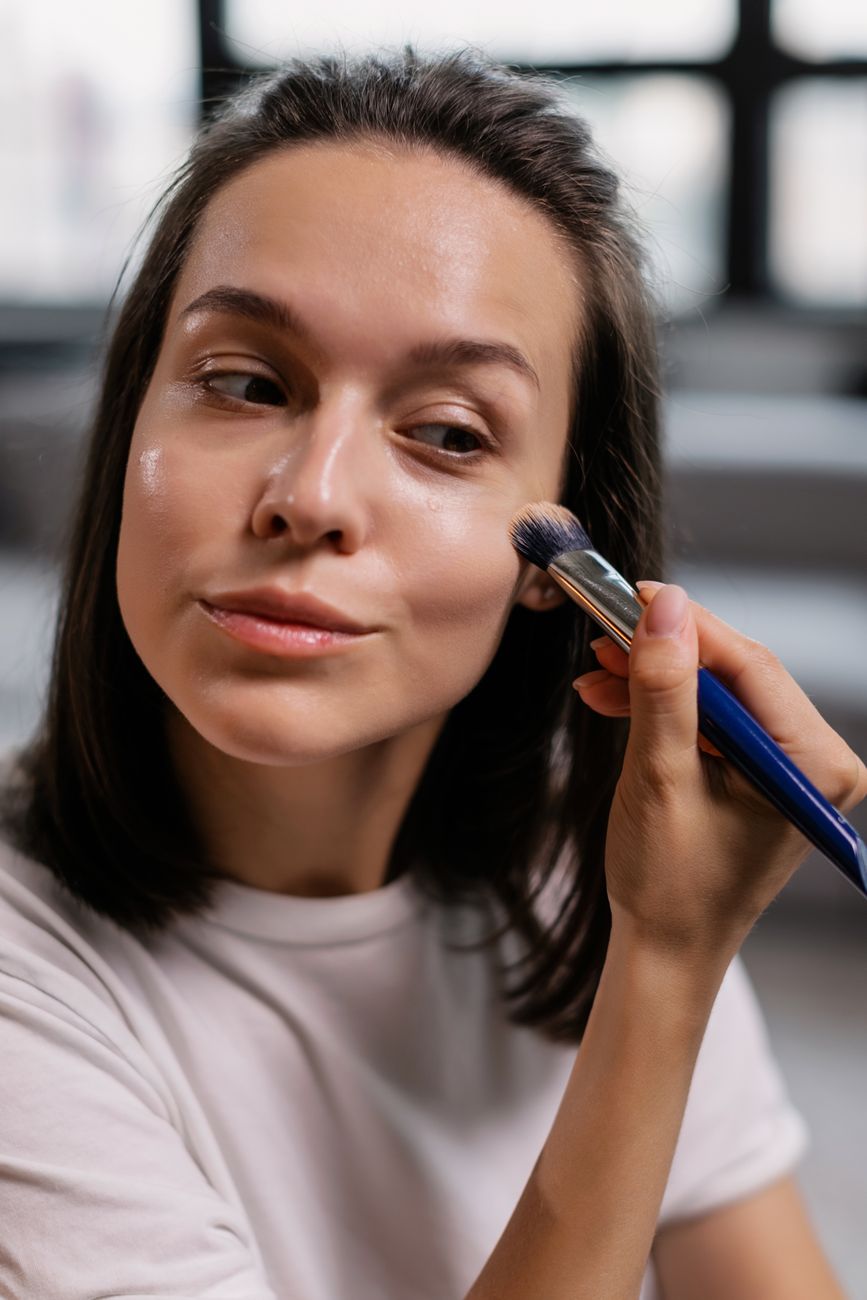
Your foundation looked flawless in the morning. Your concealer was smooth, your blush was fresh and your skin had that beautiful, just-finished makeup glow. Then lunchtime arrived. Suddenly your foundation looks patchy, your concealer has settled into fine lines, your T-zone is shining and your face looks considerably more tired than it did a few hours ago. Sound familiar? The good news is that your makeup probably does not need a complete overhaul. A few small changes to your skincare, application and midday touch-up routine could make all the difference.
The 9am Face Versus the 1pm Reality
There is something particularly frustrating about spending time perfecting your makeup in the morning, only to catch your reflection a few hours later and wonder where that fresh, polished finish went. Your foundation may have separated around your nose. Your cheeks might have lost their colour. Concealer that looked beautifully smooth at home can suddenly appear dry or crease beneath your eyes.
The temptation is to blame the products. Perhaps your foundation is not long-wearing enough, your powder is not doing its job or you need a new setting spray. Sometimes a formula really is the problem, but more often, the issue comes down to how your products interact with your skin, the environment and one another throughout the day.
Your skin is not a static canvas. It produces oil, loses moisture and moves naturally as you talk, smile and go about your day. Warm weather, humidity, air conditioning, perspiration and even the amount of time you spend touching your face can influence how makeup wears. Add several layers of skincare and complexion products into the mix, and it becomes easier to understand why a flawless morning finish can gradually lose its appeal.
The solution is not necessarily more coverage or a more complicated routine. It is learning what causes your makeup to change and making targeted adjustments that help it look fresh for longer.
1. Your Skincare Might Be Working Against Your Makeup

One of the most overlooked reasons makeup looks tired by lunchtime is what happens before foundation even touches your skin. A rich moisturiser, facial oil, hydrating serum and sunscreen can all have a place in a skincare routine. However, applying several layers in quick succession may leave your skin feeling slippery before makeup goes on.
When complexion products are applied over skincare that has not settled, foundation can slide around instead of adhering evenly. You might notice it gathering around your nose, moving across your forehead or becoming patchy on the cheeks. Adding more foundation rarely fixes the underlying issue.
Start by simplifying your morning preparation. Cleanse according to your skin’s needs, apply a suitable moisturiser and use sunscreen as the final step of your skincare routine before makeup. Allow the layers to settle before applying foundation. You do not necessarily need to wait an identical amount of time after every product, but your skin should not feel excessively wet or slippery when you begin.
Pay attention to how your skin feels throughout the day, too. If it becomes tight or flaky, stripping back every moisturising product may make matters worse. If your face becomes shiny very quickly, you may benefit from using lighter textures or applying rich products only where you need them.
For more guidance on creating a comfortable base, explore our guide to caring for your skin in winter. Although seasonal conditions change, the central lesson remains useful: skin that feels comfortable and well cared for gives makeup a better starting point.
2. You’re Applying More Foundation Than You Actually Need
Full coverage can be beautiful, but applying too much foundation is one of the quickest ways to make makeup look heavy as the day progresses. A thick layer has more product that can move, settle into creases or separate as natural oils develop.
It is also easy to mistake normal skin texture for a problem that needs covering. In the bright bathroom lighting of the morning, you might keep adding product until every area looks perfectly even. Under natural daylight, that same amount can appear noticeably heavier.
Instead, begin with a thin layer and concentrate coverage where you need it most. This might be around the nose, across areas of redness or on particular marks. Blend the remaining product gently towards the edges of your face, allowing your natural skin to show through wherever possible.
Give the first layer a moment to settle before deciding whether you need more. You may find that a small amount of concealer on a specific area creates a more polished result than another full layer of foundation.
Your application tool can make a difference as well. A damp makeup sponge can help press and blend product into the skin, while a brush may offer more coverage depending on its shape and how you use it. Neither is automatically superior. The best tool is the one that gives you the finish you want without encouraging you to keep adding product.
For a more detailed look at choosing and applying complexion products, read our makeup rules to forget after 40. Its advice is a useful reminder that more product does not always mean a better finish and that placement can matter more than the number of steps in your routine.
3. Your Foundation Formula May Not Suit Your Skin
Sometimes the problem really is your foundation. A formula that looks beautiful when first applied may not wear well on your skin, particularly if your skin is oily in some areas and dry in others.
If your foundation separates around the nose and forehead, your skin may be producing oil faster than the formula can comfortably accommodate. If it clings to dry patches or looks rough around the mouth, the product may be emphasising texture that was less noticeable before application. A finish that looks luminous at 9am can also become overly shiny after several hours in warm or humid conditions.
Before replacing your entire makeup collection, identify exactly what happens to your base. Does it disappear? Does it become shiny? Does it separate into visible patches? Or does it remain in place but look dry and textured? Each problem points towards a different adjustment.
If excess shine is the main issue, test a more balanced or long-wearing formula. If dryness is the concern, consider whether your skincare preparation needs attention or whether a lighter, more flexible foundation would look better. If your skin has different needs across the face, you can also use different amounts of product in different areas rather than expecting one heavy layer to solve everything.
Whenever possible, test a foundation over a normal day rather than judging it immediately after application. Wear it through your usual activities and check how it looks after several hours. A beautiful first impression is useful, but the way a product behaves over time is what determines whether it deserves a place in your everyday routine.
4. Concealer Is Creasing Because You’re Asking Too Much of It
Concealer often looks perfect in the morning because it has just been blended. As the day progresses, facial movement and the natural folds beneath the eyes can cause the product to gather in fine lines. If you have applied a thick layer in an attempt to erase every shadow, the result can become even more noticeable.
The fix begins with using less. Apply a small amount only where you want coverage, such as the inner corner or a particular area of discolouration. Blend the edges carefully and allow the product to settle before deciding whether you need another layer.
Before setting it, look closely at the area. If concealer has collected in a crease, gently smooth away the excess with a clean fingertip or a small brush. A light application of finely milled powder may help where creasing is a recurring problem, but applying too much powder can emphasise dryness and texture.
It is also worth remembering that concealer cannot completely remove the natural shadows created by facial structure. Trying to eliminate every trace of darkness often leads to a heavier finish than you intended. The aim is to brighten and even the area while allowing your skin to look like skin.
If tired-looking eyes are your main concern, our 10-minute under-eye fix for puffiness, dryness and tired-looking eyes offers more ideas to explore before reaching for another layer of concealer.
5. Too Much Powder Is Making Your Skin Look Flat
Powder has an important role in keeping makeup comfortable and reducing unwanted shine. The problem begins when it is applied everywhere, in generous amounts, simply because a matte finish is assumed to last longer.

Heavy powder can make the complexion look flat, emphasise dry patches and create a powdery appearance that becomes more obvious as the day goes on. If you have used a luminous foundation, applying powder across your entire face may also remove the natural dimension that made your makeup look fresh in the first place.
Try a more targeted approach. Use a small amount around the nose, between the brows and on the forehead if those areas tend to become shiny. Leave the parts of your face that remain comfortable and balanced alone. If your cheeks are naturally dry, they may not need additional powder at all.
Application matters just as much as quantity. Tap excess product from your brush before touching your face. Press powder lightly where it is needed rather than repeatedly sweeping it over the same area. Then step back and assess the result in natural light.
When shine appears later, resist the urge to apply another layer immediately. First, use blotting paper or a clean tissue to remove excess oil. Follow with a small amount of powder only if necessary. Removing shine before adding more product helps prevent the buildup that can make makeup look thick by lunchtime.
6. Your Blush and Bronzer Are Disappearing
A fresh blush can make the entire face look more awake, so it is particularly frustrating when the colour seems to vanish before lunch. Bronzer can behave similarly, leaving your makeup looking less defined even when your foundation is still in place.
There are several possible reasons. The formula may not have enough staying power for your skin, the colour may be too subtle to remain visible throughout the day, or the product may be applied over a base that is still moving. In other cases, the issue is simply that the colour has faded naturally as you go about your day.
Start by applying cheek products in light layers. Blend a little colour onto the cheeks, assess the result and build gradually if you want more intensity. Applying one heavy layer can make the colour look strong at first without necessarily improving its wear.
Cream and powder products can both work well. A cream blush can create a fresh, natural finish, while a powder formula may be convenient for a quick touch-up. If you enjoy layering formulas, use compatible products and apply them gently to avoid disturbing the foundation underneath.
The placement of colour can also influence how awake your face appears. A little blush placed thoughtfully on the cheeks can bring warmth back to the complexion, while a touch of bronzer around the perimeter of the face can add definition. You do not need to use both if one already gives you the effect you want.
The goal is not to make your cheeks look exactly as they did at 9am. It is to maintain enough colour and dimension that your makeup still feels balanced several hours later.
7. Your Makeup Is Fighting the Weather
A routine that performs beautifully in a cool, air-conditioned room may behave very differently during a warm commute, a humid afternoon or a day spent moving between indoor and outdoor environments. Heat and perspiration can cause makeup to shift, while air conditioning may leave skin feeling dry and uncomfortable.
This is why the same products can seem reliable one day and disappointing the next. Environmental conditions influence both how your skin feels and how makeup wears.
During warmer weather, consider using thinner layers and concentrating longer-wearing products where you need them most. Allow skincare and sunscreen to settle before applying complexion products, and avoid repeatedly touching or wiping your face throughout the day. If you perspire, gently blot rather than rubbing the skin.
In cooler or drier conditions, comfort may be the bigger priority. If your foundation begins to catch on flaky areas, adding more powder is unlikely to help. Review your skincare preparation and consider whether the finish of your foundation is suitable for your skin at that time.
Sunscreen should remain an essential part of your daytime routine. Follow the product’s directions for application and reapplication, including after sweating or wiping your face. Makeup should not prevent you from protecting your skin outdoors.
8. You’re Expecting Makeup to Stay Untouched All Day
One of the biggest beauty misconceptions is that well-applied makeup should look completely unchanged from morning until evening. Even carefully applied, long-wearing products can shift slightly as your skin produces oil, your face moves and the environment changes.
A better goal is makeup that fades gracefully and can be refreshed without starting again. Once you accept that a small midday adjustment is normal, there is less pressure to find a single product that promises to solve every problem.
Your routine can also be simpler than you think. You may only need to remove excess shine, restore a little colour to your cheeks and refresh your lips. If your foundation still looks good, there is no reason to apply another layer over your entire face.
For inspiration on creating a beauty routine that suits your preferences rather than following every new trend, explore ele STYLED’s guide to finding a beauty routine that reflects your personal style. The most useful routine is one that fits your lifestyle, feels comfortable and delivers the results you actually enjoy.
The 5-Minute Midday Makeup Reset
When your reflection looks a little less fresh at lunchtime, you do not need to disappear into the bathroom and start your makeup from scratch. A few careful steps can help restore a polished appearance without creating another layer of product.
Step one: remove excess shine. Press blotting paper or a clean tissue gently against oily areas. Avoid rubbing, which can disturb foundation and blush.
Step two: check your base. Look at the sides of your nose, around your mouth and beneath your eyes. If makeup has gathered in a crease, smooth away the excess before adding anything else.
Step three: apply only the coverage you need. If a small area needs attention, use a little concealer or foundation and blend the edges. Leave the rest of your face alone if it still looks good.
Step four: bring back colour. A small amount of blush can restore warmth to the complexion. If your lipstick has faded, reapply it or use a tinted lip product for a quick refresh.
Step five: finish selectively. Add a little powder only where shine remains a problem. Check your face in natural light if possible, then stop before the temptation to keep adding products takes over.
The secret to a successful touch-up is restraint. Removing excess product and refreshing a few details will usually look better than covering the entire face with another layer.
How to Make Your Makeup Last From Morning to Evening
Long-lasting makeup starts with understanding your own skin rather than buying every product labelled long-wear. Notice where your makeup fades first, which areas become shiny and whether certain products consistently separate or crease. These patterns are more useful than a complicated routine copied from someone with entirely different skin.
Keep your preparation consistent while testing changes one at a time. If you suspect your moisturiser is making foundation slide, adjust that step before replacing your foundation, powder and setting spray together. If your concealer creases, experiment with the amount and placement before buying another formula.
Choose products according to the finish you enjoy and the conditions you experience most often. A soft, radiant complexion may be your preference, while someone else may feel more comfortable with a natural matte finish. Neither look needs to be the universal answer.
Most importantly, let your makeup work with your skin. A little natural shine, visible texture and gradual fading are not signs that your routine has failed. When the complexion looks comfortable and the overall effect remains balanced, makeup is doing exactly what it should.
Frequently Asked Questions
Why does my foundation look good in the morning but patchy by lunchtime?
Foundation can become patchy when skincare has not settled, the formula does not suit your skin or oil and perspiration cause the product to move. Start by using thinner layers, allowing skincare to settle and identifying exactly where the foundation separates.
How can I stop my makeup from looking cakey during the day?
Avoid adding more foundation or powder over existing layers without checking what is causing the problem. Blot excess oil, smooth away product that has gathered in creases and apply fresh coverage only where necessary. A lighter morning application can also help.
Why does my face look oily even when I use setting powder?
Your skin may produce oil faster than the powder can manage, or your skincare and foundation may be contributing to excess shine. Try blotting first, then apply a small amount of powder only to the areas that need it. Using more powder across the whole face may create a heavier finish.
Should I use setting spray to make my makeup last longer?
Setting spray can help some makeup routines wear more evenly, but it is not a guaranteed fix for every problem. It will not necessarily correct unsuitable skincare, excessive foundation or a formula that separates on your skin. Test it as one part of your routine rather than relying on it to do everything.
Is powder or cream blush better for long-lasting colour?
Neither is automatically better for everyone. The result depends on the formula, your skin and how the product interacts with your base. Try each option over a normal day and choose the one that gives you the finish and wear you prefer.
How often should I touch up my makeup?
There is no universal schedule. Check your makeup when it feels necessary, such as after a warm commute or before an afternoon meeting. If it still looks good, leave it alone. Targeted touch-ups are usually more useful than repeatedly adding product throughout the day.
Does oily skin need a completely matte foundation?
Not necessarily. Oily skin can still look beautiful with a natural or softly radiant finish. The aim is to find a formula that feels comfortable and wears well, then manage shine selectively instead of trying to eliminate every trace of natural luminosity.
Can skincare make my foundation separate?
Yes. If several products leave your skin slippery or have not settled before foundation is applied, your base may move or apply unevenly. Simplify your morning layers if needed, allow them to settle and test changes one at a time while keeping sunscreen in your routine.
The Wrap
If your makeup looks beautiful at 9am but tired by lunch, you probably do not need to replace every product in your makeup bag. You need to understand what is happening between the moment you finish getting ready and the moment you check your reflection again.
Start with comfortable skincare. Apply foundation in thin layers. Use concealer and powder selectively. Choose formulas that suit your skin and the conditions you experience, and learn how to refresh your makeup without piling on more product.
Most importantly, stop expecting your face to look completely untouched after several hours. Makeup is meant to move with you through real life, not remain frozen in its morning finish.
A fresh complexion is not necessarily the one with the most coverage or the fewest visible pores. It is the one that looks balanced, feels comfortable and still makes you feel like yourself. Sometimes the smartest beauty trick is not adding another product. It is knowing exactly when you have used enough.
Where’s Next?
The Makeup Rules You Need to Forget After 40 (And What Actually Works) Discover how small changes to foundation, concealer and powder can help create a fresher and more comfortable makeup finish.
TIRTIR Mask Fit Red Cushion Review: Is The Viral K-Beauty Foundation Worth It? Find out whether this popular cushion foundation delivers the smooth and long-lasting coverage you want from your everyday makeup.
Ellis Faas Skin Veil Foundation Review: Is It Worth the Price? Explore a lightweight foundation designed to create a natural-looking complexion without the heavy, mask-like finish.
Valentine’s Day Makeup Looks to Fall in Love With Explore beautiful makeup ideas ranging from soft, glowing skin to more defined looks that feel polished without looking overdone.
Victoria Beckham Beauty Colour Wash Review Discover a subtle liquid blush that adds a fresh-looking flush of colour and brings a little more life to your makeup.



Leave a Reply